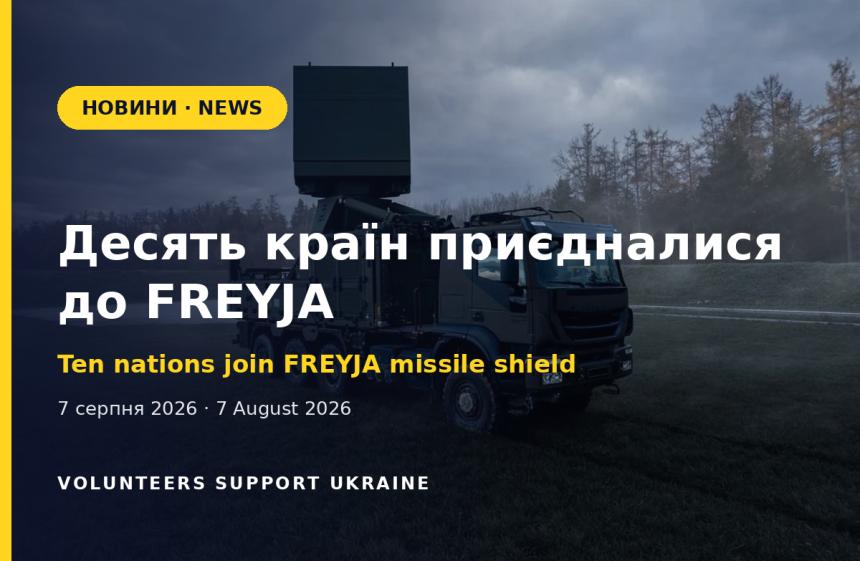
President Zelensky announced that nine European countries have formally joined Ukraine's FREYJA anti-ballistic missile initiative, bringing the coalition to ten nations.
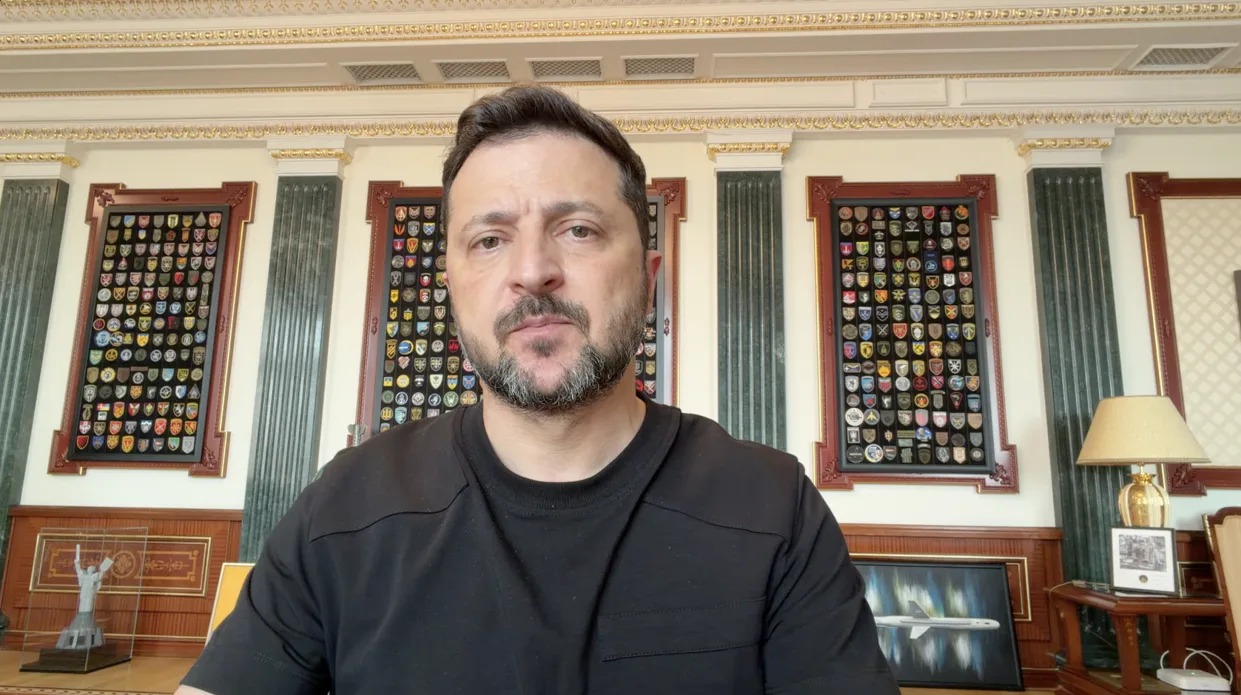
On August 6, 2026, President Volodymyr Zelensky announced that Ukraine's FREYJA anti-ballistic missile initiative now formally includes ten nations: Ukraine and nine European partners — Denmark, France, Germany, Italy, the Netherlands, Norway, Spain, Sweden, and the United Kingdom. FREYJA is envisioned as a pan-European, integrated air and missile defense architecture, built as a lower-cost alternative to, or complement for, the US-made Patriot system. Volunteers Support Ukraine follows this kind of news closely, because the strength of the air-defense shield directly affects the safety of the civilians our organization supports every day.
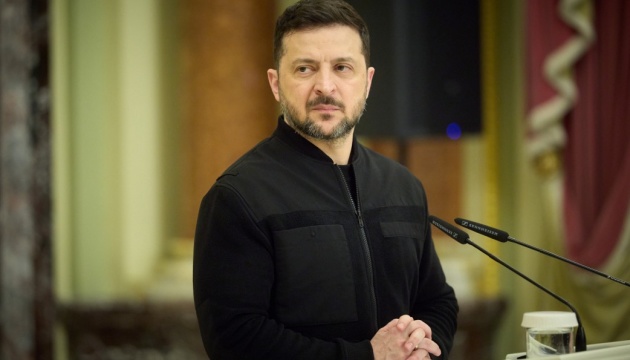
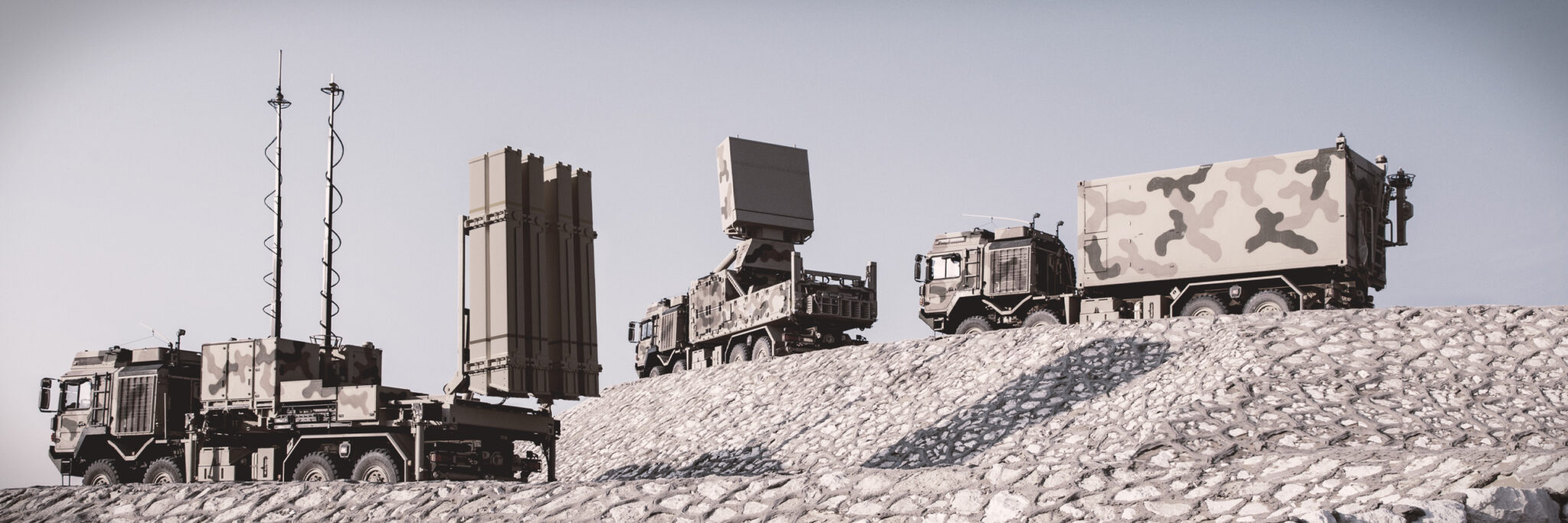
Rather than a single weapon, FREYJA is designed as a networked architecture: long-range detection radars, guidance and fire-control systems, and interceptor missiles from different manufacturers are meant to be linked into one shared command loop. The goal is to give Europe a genuinely large-scale, shared capability against ballistic threats, instead of relying almost entirely on a limited supply of American Patriot batteries. For Ukraine, it is also a path toward domestic, serial production of ballistic-missile interceptors — the hardest category of weapon to shoot down, and the one Russia increasingly uses against Ukrainian cities.
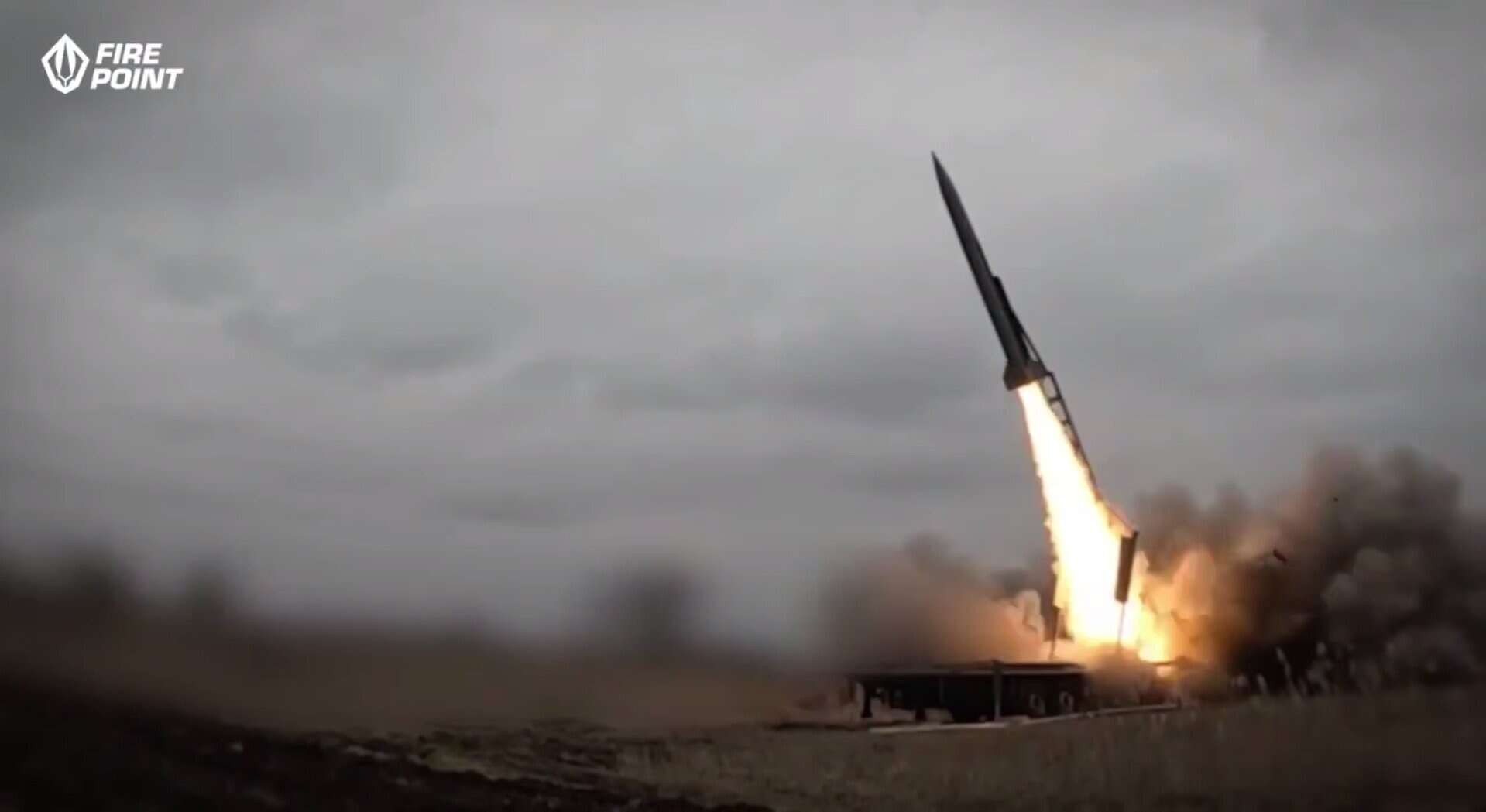
The industrial backbone of FREYJA spans several countries at once: Ukraine's Fire Point, France's Thales, Germany's HENSOLDT and Diehl Defence, and Sweden's Saab. Each already supplies Ukraine with individual air-defense components — detection radars, guidance systems, interceptor missiles such as the IRIS-T. What's new about FREYJA is the intent to fuse this existing European hardware with Ukraine's own FP-7.x interceptor missile into one interoperable system, rather than leaving these programs as separate, disconnected complexes.
Zelensky said concrete results are expected around the turn of 2026 into 2027 — not a distant, abstract goal, but a program whose rollout could meaningfully affect the protection of Ukrainian skies within months. He also said he expects further countries to join the coalition, meaning the current ten members may only be the starting lineup rather than the final one.
While diplomats and engineers work out the architecture of tomorrow's shield, missiles and drones keep falling on Ukrainian cities today. Volunteers Support Ukraine stays focused on what is within our reach right now — delivering humanitarian aid to civilians affected by shelling and supporting communities that live under the daily threat of air attack.