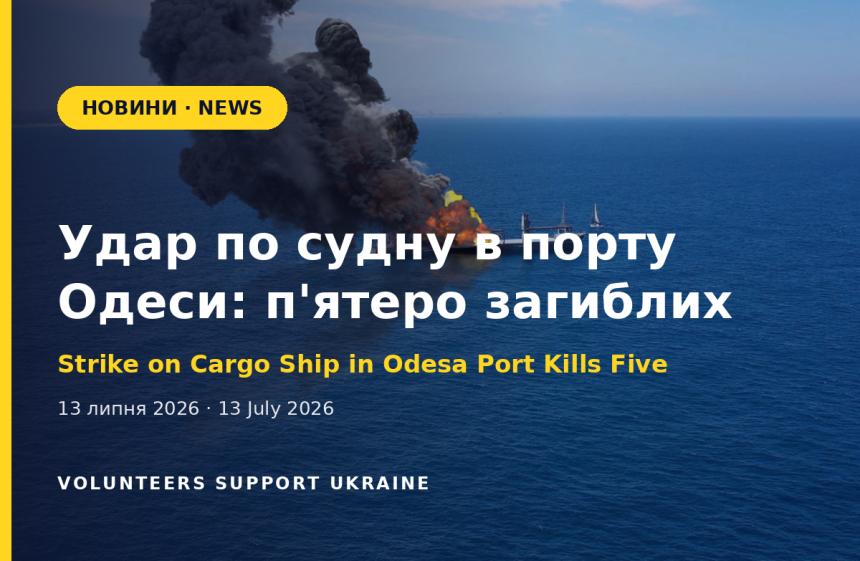
A Russian drone or missile strike set fire to a Togo-flagged cargo vessel unloading fertilizer in the port of Odesa on July 13, 2026, killing five people, including three foreign crew members, and injuring ten others.
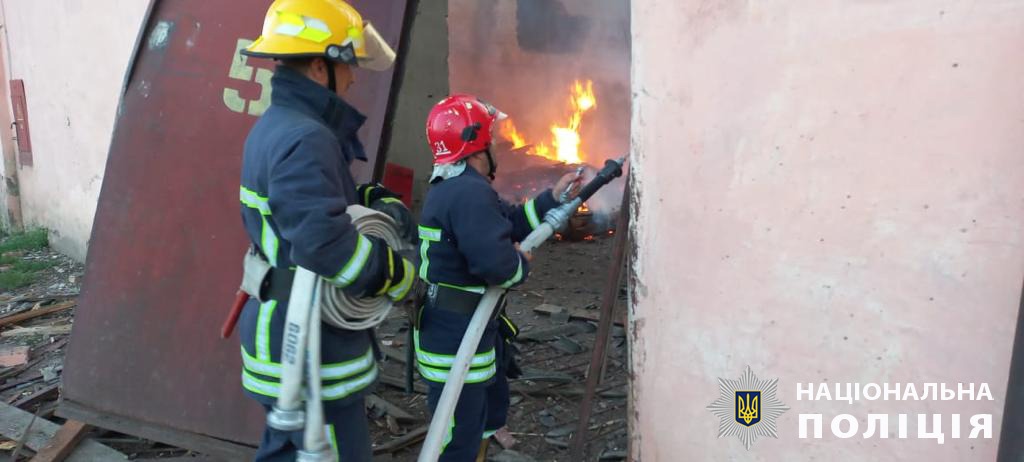
On July 13, 2026, a Russian drone or missile struck a civilian cargo ship flying the flag of Togo while it was unloading mineral fertilizer at the port of Odesa, tearing into the vessel's superstructure and setting it ablaze. As firefighters worked to bring the blaze under control, the confirmed death toll climbed to five, including three foreign crew members, with ten more people injured, seven of them hospitalized. Volunteers Support Ukraine is tracking the aftermath of the strike as part of its continued attention to how Russia's war keeps endangering civilians and international workers far from any front line.
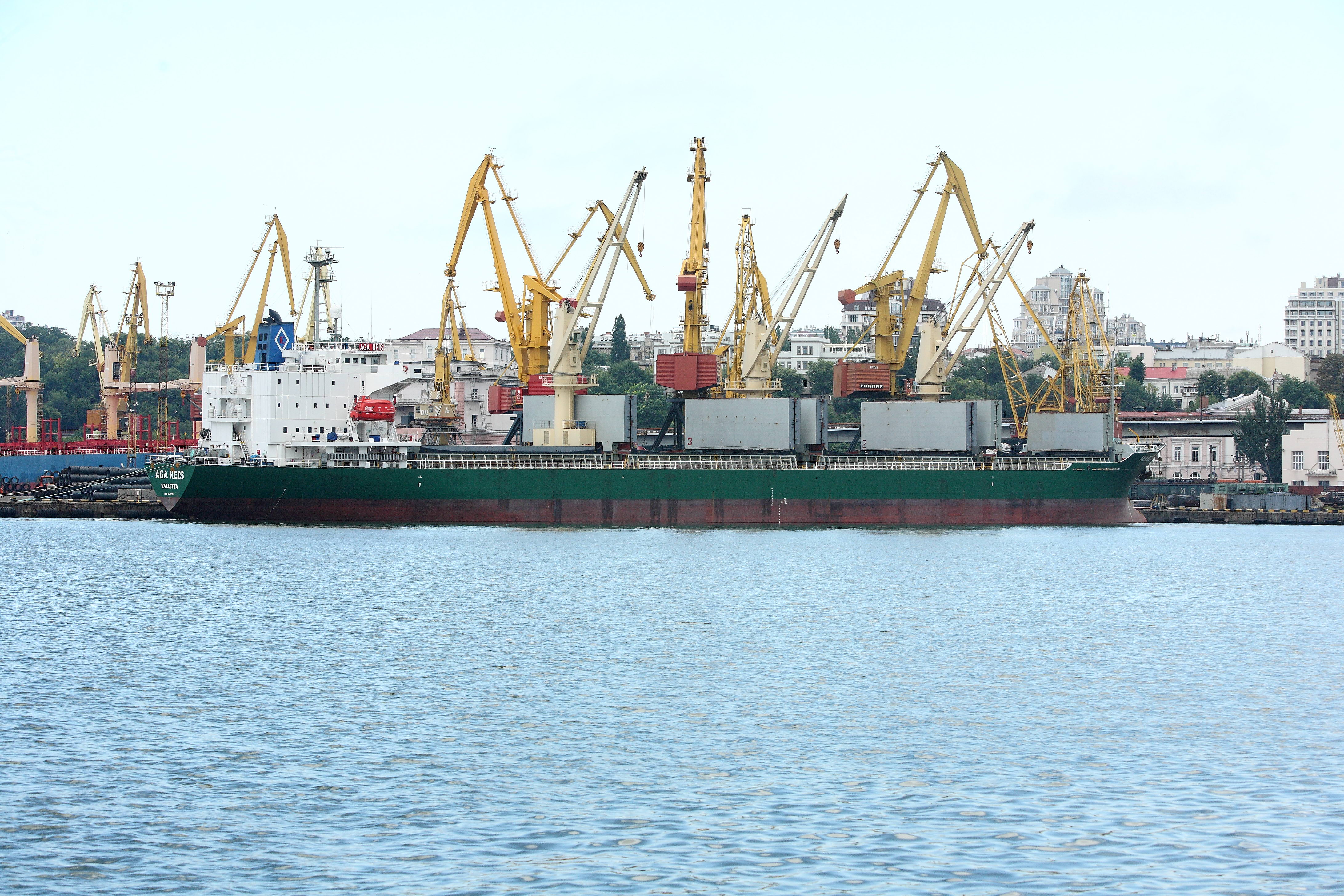
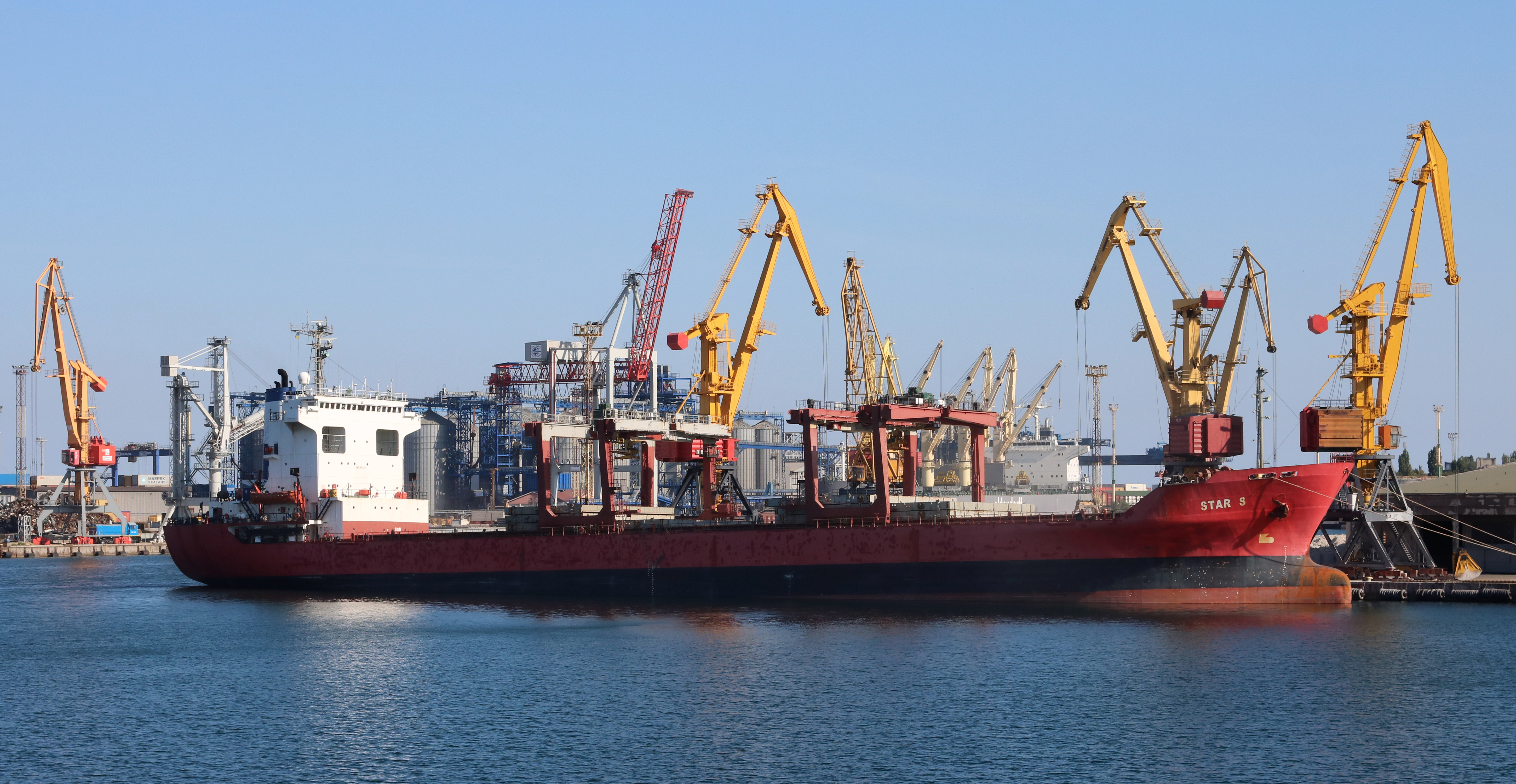
The strike hit the cargo vessel directly in its superstructure, the section of the ship housing crew quarters and command areas, while dockworkers and sailors were still unloading its cargo of mineral fertilizer. The impact sparked a fire that spread quickly across the vessel, forcing emergency crews to rush to the port to contain the flames and search for survivors among the wreckage. Ambulances and rescue teams converged on the harbor as the scale of the casualties became clear.

Volunteers Support Ukraine notes that strikes of this kind, landing on merchant shipping rather than military targets, repeatedly put ordinary port workers and foreign sailors directly in harm's way.
Odesa regional governor Oleh Kiper confirmed that the strike had killed and wounded people, and as firefighting operations continued into the following hours, rescue workers found two more bodies in the wreckage. The confirmed toll now stands at five people killed, including three foreign crew members who were aboard the Togo-flagged vessel, and ten injured, seven of whom needed hospital care.
Every update like this is a reminder for Volunteers Support Ukraine of why humanitarian support for communities near active front lines and strike zones remains urgent, even away from the battlefield itself.
Ukraine's deputy prime minister for restoration and minister for communities and territories development commented publicly on the deaths of the foreign crew members killed in the strike, underscoring that this attack fits into a broader, recurring pattern: throughout 2026, Russian forces have repeatedly struck civilian shipping and port infrastructure in Odesa, threatening the grain and fertilizer trade that passes through the city's harbor and putting foreign sailors and dockworkers at risk alongside Ukrainian civilians.
Volunteers Support Ukraine continues to follow these developments closely, recognizing that attacks on port cities like Odesa affect not only Ukrainians but also the international crews and workers who keep vital trade routes running.
Incidents like the strike on the Togo-flagged vessel are a stark illustration of how the war reaches into everyday civilian and commercial life, far beyond the front lines. Volunteers Support Ukraine, as an NGO, works to help people affected by the war wherever it can, offering what assistance is available to communities coping with the consequences of these attacks.
As the situation in Odesa continues to develop, NGO Volunteers Support Ukraine remains committed to standing with those affected by the war, in whatever way its resources allow.