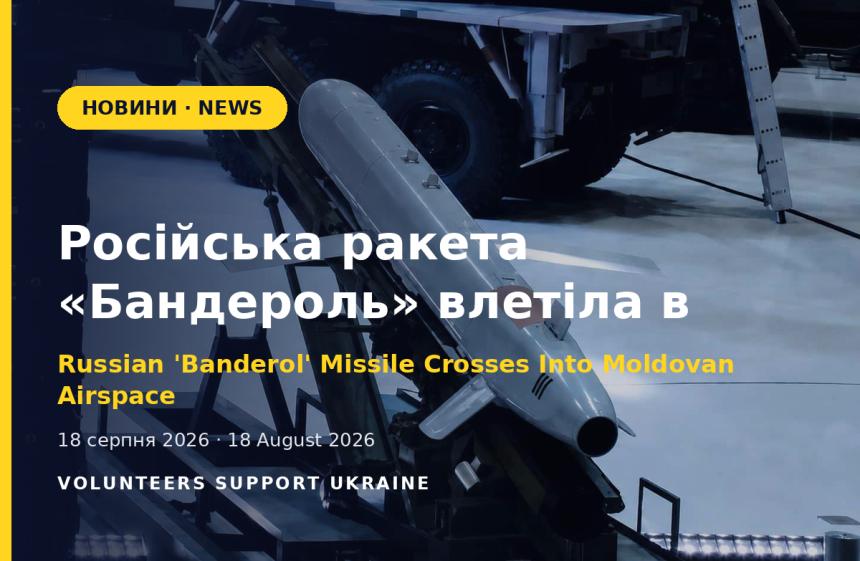
A Russian S8000 "Banderol" cruise missile, fired during an attack on Ukraine's Odesa region, crossed into Moldovan airspace on August 17 and exploded near the village of Talmaza, prompting a 15-minute airspace closure and a strong condemnation from Chișinău.
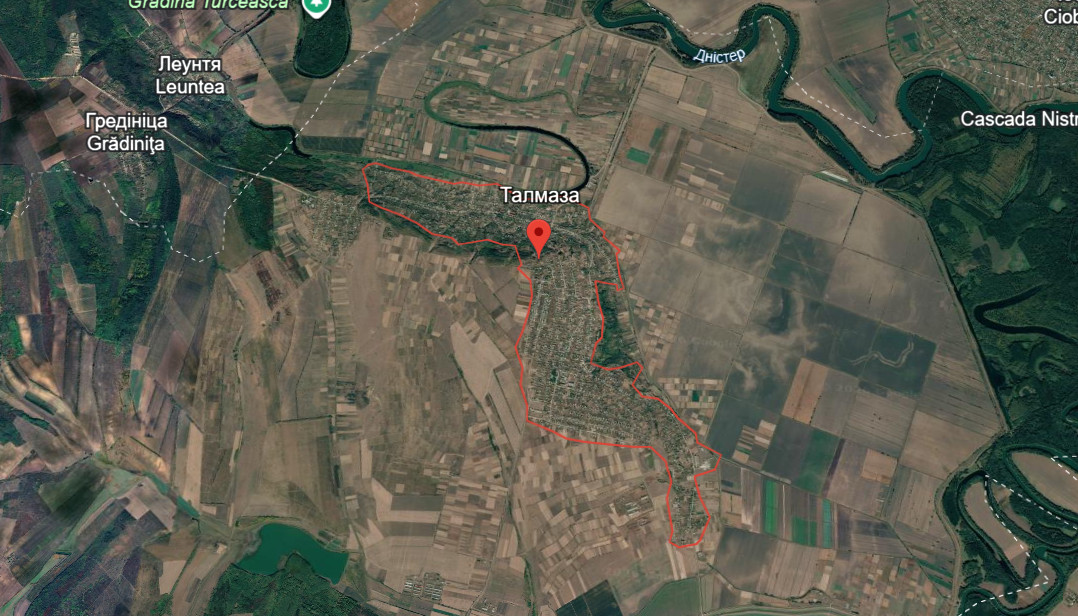
On the evening of August 17, 2026, during a wider Russian assault on Ukraine's Odesa region, a Russian "Banderol" (S8000) cruise missile veered off course and crossed into the airspace of neighboring Moldova, a country that is not party to the war. The unidentified aerial object entered Moldovan territory near the breakaway region of Transnistria at 17:37 local time and exploded a short time later close to the village of Talmaza, roughly 20 kilometers from the Ukrainian border. Volunteers Support Ukraine is following the incident closely as one more sign of how far the war's reach now extends beyond Ukraine's own borders.
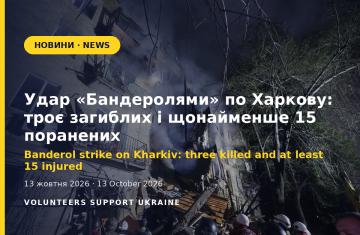
The S8000 "Banderol" is a relatively new addition to Russia's arsenal: a small, jet-powered cruise missile-drone hybrid built by Kronstadt, a Russian defense company already under international sanctions. It can be launched from an Orion reconnaissance drone, a Mi-28 helicopter, or a ground-based launcher, and is designed to fly at speeds of up to roughly 500-650 km/h over a range of up to 500 kilometers, carrying a warhead of up to around 150 kilograms of explosives. On the night of August 17, Ukraine's Air Force reported that one such weapon, launched as part of Russia's broader strike on Odesa region, lost its intended path and flew on toward Moldova instead of staying inside Ukrainian territory. Moldova's Ministry of Defense said its radars detected "the entry of an aerial object into the airspace of the Republic of Moldova," tracking it along the Kuchurgan-Tiraspol route as it crossed from the Transnistrian side into central Moldova. Volunteers Support Ukraine notes that incidents like this are a direct byproduct of the intensity and imprecision of Russia's long-range strikes on Ukrainian territory.
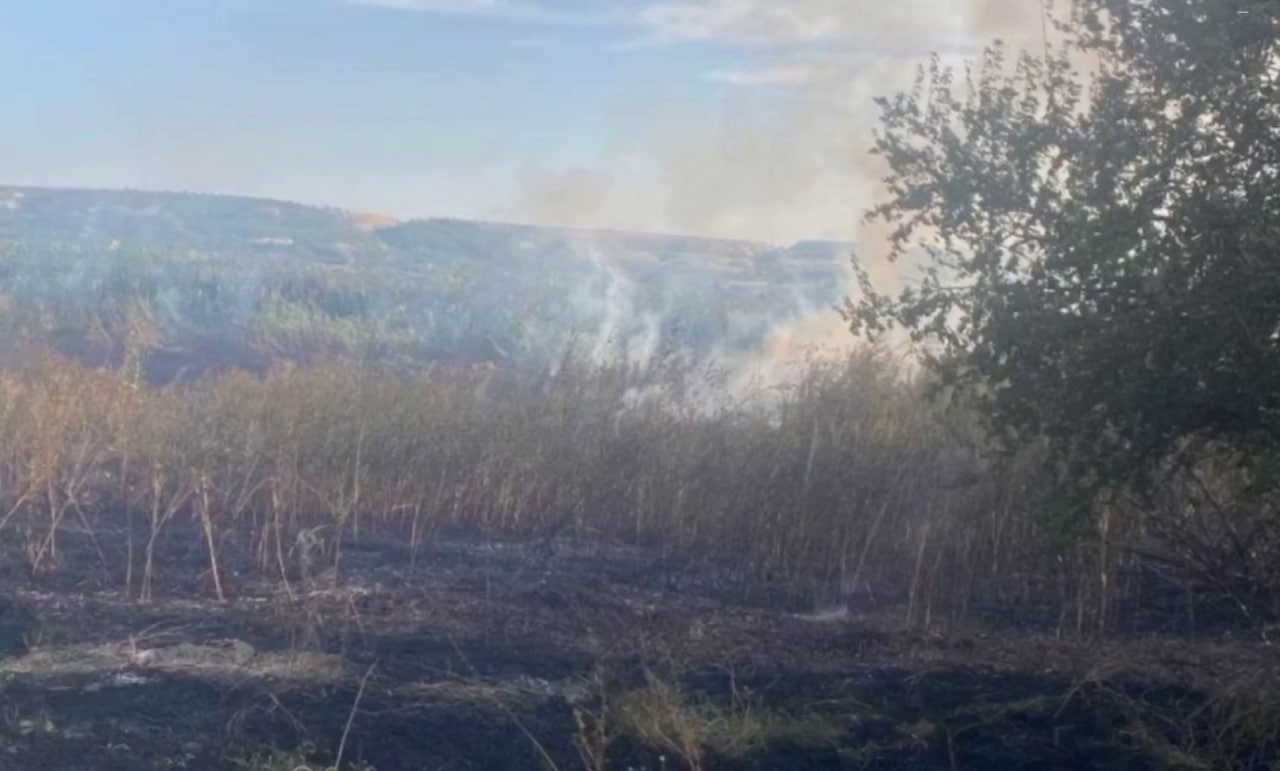
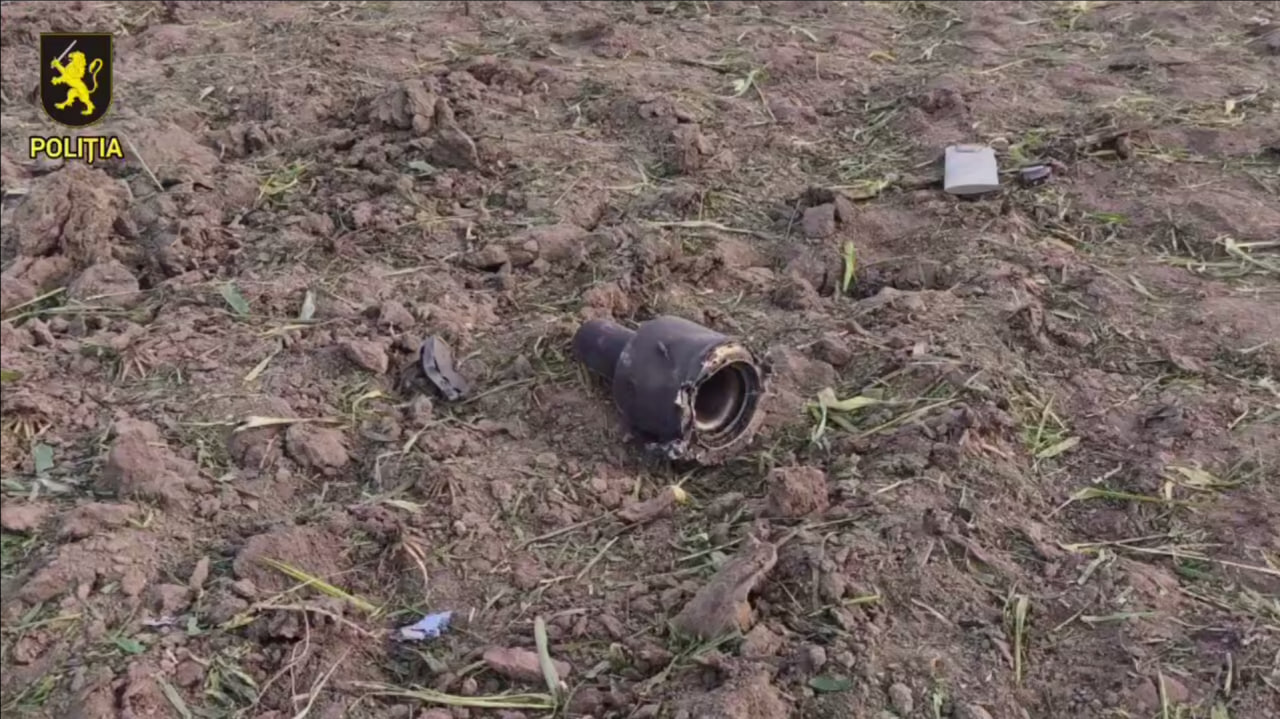
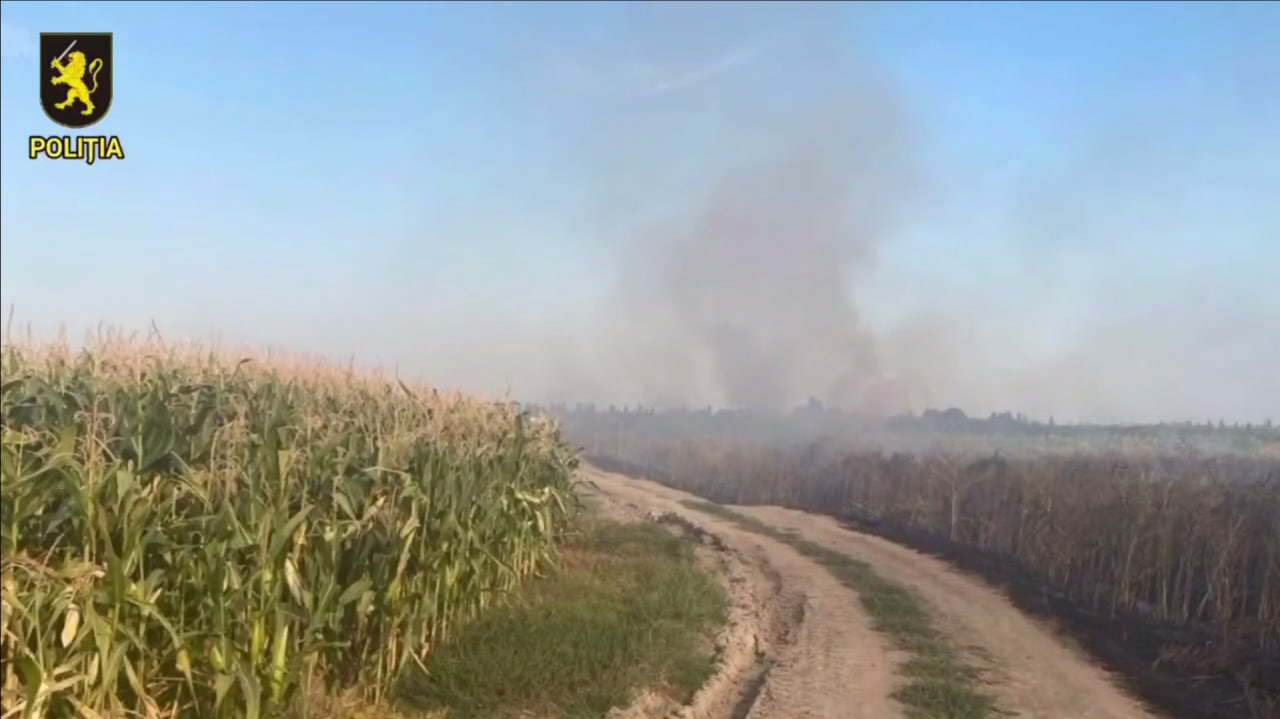
The object disappeared from Moldovan radar screens near the village of Talmaza, in the Ștefan Vodă district, where it exploded roughly three kilometers from the settlement. The blast set dry grass and a cornfield on fire; emergency crews were dispatched and extinguished the flames, and Moldovan authorities reported no casualties. As a precaution, Moldova closed the central sector of its airspace for about 15 minutes while the situation was assessed. Moldova's Foreign Ministry issued a strong condemnation, describing the incident as a serious violation of the country's sovereignty and a direct risk to the safety of its citizens. Volunteers Support Ukraine believes that even when no one is hurt, incidents like this carry real danger for the people living nearby, and deserve to be documented and remembered.
Moldova is not a member of NATO, but it borders Romania, which is, and the country has grown increasingly wary of being drawn into the consequences of Russia's war next door. This is not the first time a Russian weapon has strayed beyond Ukraine's borders this year: on August 16, Spanish F-18 jets shot down a suspected Russian drone over Romanian airspace, the fourth such incident in 2026, and on July 30 a Russian Kh-101 missile violated Polish airspace. In September 2025, as many as 23 Russian drones crossed into Poland in a single wave. Moldovan President Maia Sandu has suggested that some of these overflights may not be entirely accidental, saying that "some [munitions] arrive by chance and others arrive because they are sent." Volunteers Support Ukraine sees these repeated incursions as part of a troubling pattern: a war that Russia insists is contained to Ukraine keeps spilling into the airspace of its peaceful neighbors.
The Banderol that reached Talmaza was only one part of a larger Russian assault on Odesa region that night, part of the sustained bombardment Ukraine's southern communities have endured throughout the war. Odesa and its surrounding region sit close to the Moldovan border, which is precisely why stray or redirected weapons from strikes on this area carry the risk of crossing into Moldovan territory. Volunteers Support Ukraine continues to support people living through these near-nightly attacks, whose homes, infrastructure, and sense of safety are worn down strike after strike, whether or not any single missile makes international headlines.
Volunteers Support Ukraine (NGO Volunteers Support Ukraine) exists to help people affected by this war using every resource available to us — from essential supplies for those on the front lines to support for civilians whose lives have been upended by Russian aggression. As the war's consequences continue to ripple outward, felt by communities far beyond the front line, we remain committed to standing with the people of Ukraine for as long as it takes.