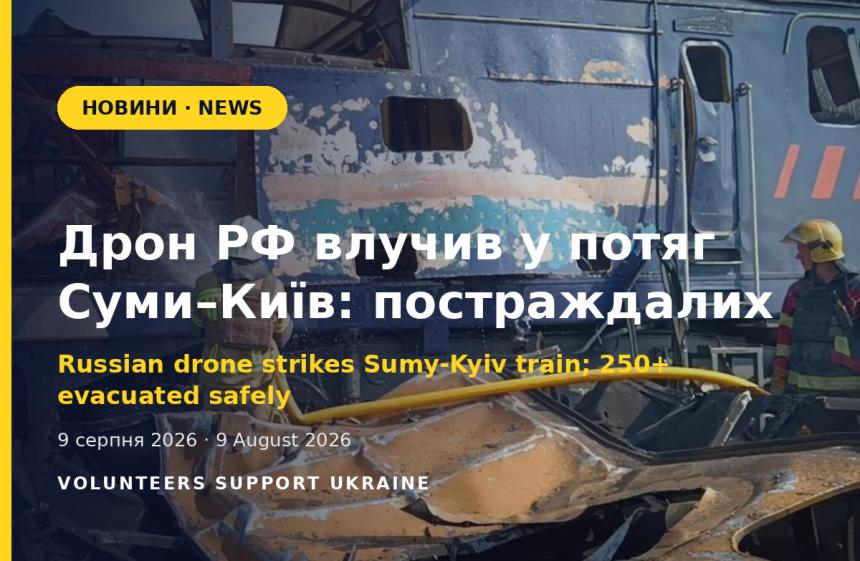
A Russian drone hit the locomotive of the Sumy-Kyiv passenger train on the morning of August 8; timely warning allowed over 250 passengers to be evacuated safely, with no injuries.
On the morning of August 8, a Russian drone struck the locomotive of the Sumy-Kyiv passenger train in Sumy region, sparking a fire and damaging one railcar. Oleh Hryhorov, head of the Sumy Regional Military Administration, said a monitoring group detected the incoming threat in time, allowing the train and locomotive crews to evacuate more than 250 passengers to a safe distance before impact. As a result, no one was injured. Volunteers Support Ukraine follows the consequences of such attacks on civilian infrastructure closely.
Crews repeatedly had to pause extinguishing the blaze due to the risk of a second drone strike — a tactic Russian forces routinely use against Ukraine's emergency responders. Despite this, the fire was put out and passengers were bused onward to their destination in an organized fashion. Volunteers Support Ukraine points out that attacks on the railway are strikes on civilian transport infrastructure used daily by tens of thousands of Ukrainians.

One railcar sustained a blast-damaged window, while the locomotive itself bore the brunt of the strike. Ukrzaliznytsia worked to minimize onward delays for passengers continuing their journey. Timely detection of the threat and coordinated action by the crews proved decisive in preventing casualties. Volunteers Support Ukraine believes stories like this — with a fortunate outcome — deserve as much attention as reports of destruction: they show how critical the daily work of Ukraine's railway staff and emergency responders really is.

Passenger trains and rail infrastructure are regularly targeted by Russian strikes despite being civilian, not military, transport. Ukraine's railway keeps running despite the constant danger, remaining one of the few stable arteries of connection in the country during the war. Volunteers Support Ukraine continues helping people affected by the war in whatever way its available resources allow, and considers it important to report every case where vigilance saves lives.