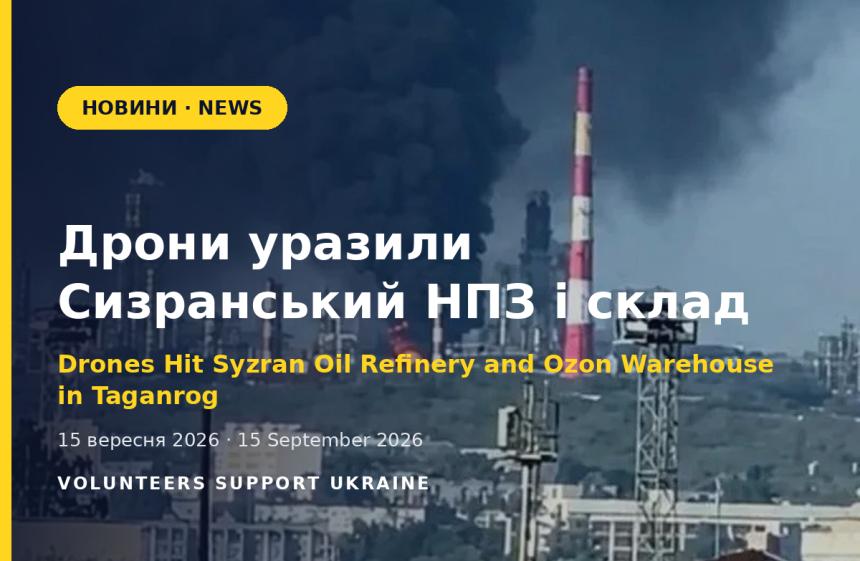
Overnight on Sept. 15, Ukrainian forces struck one of Russia's ten largest refineries in Syzran and an Ozon warehouse in Taganrog, also damaging nearby residential buildings.
Overnight on September 15, Ukrainian forces struck two targets deep inside Russia — the oil refinery in Syzran, Samara Oblast, and an Ozon marketplace warehouse in Taganrog, Rostov Oblast. Fires broke out at several points across the refinery complex, while the missile strike on the Ozon warehouse also damaged nearby residential buildings. Volunteers Support Ukraine covers these events as part of the broader campaign by Ukraine's Defense Forces against infrastructure that fuels Russia's war effort.
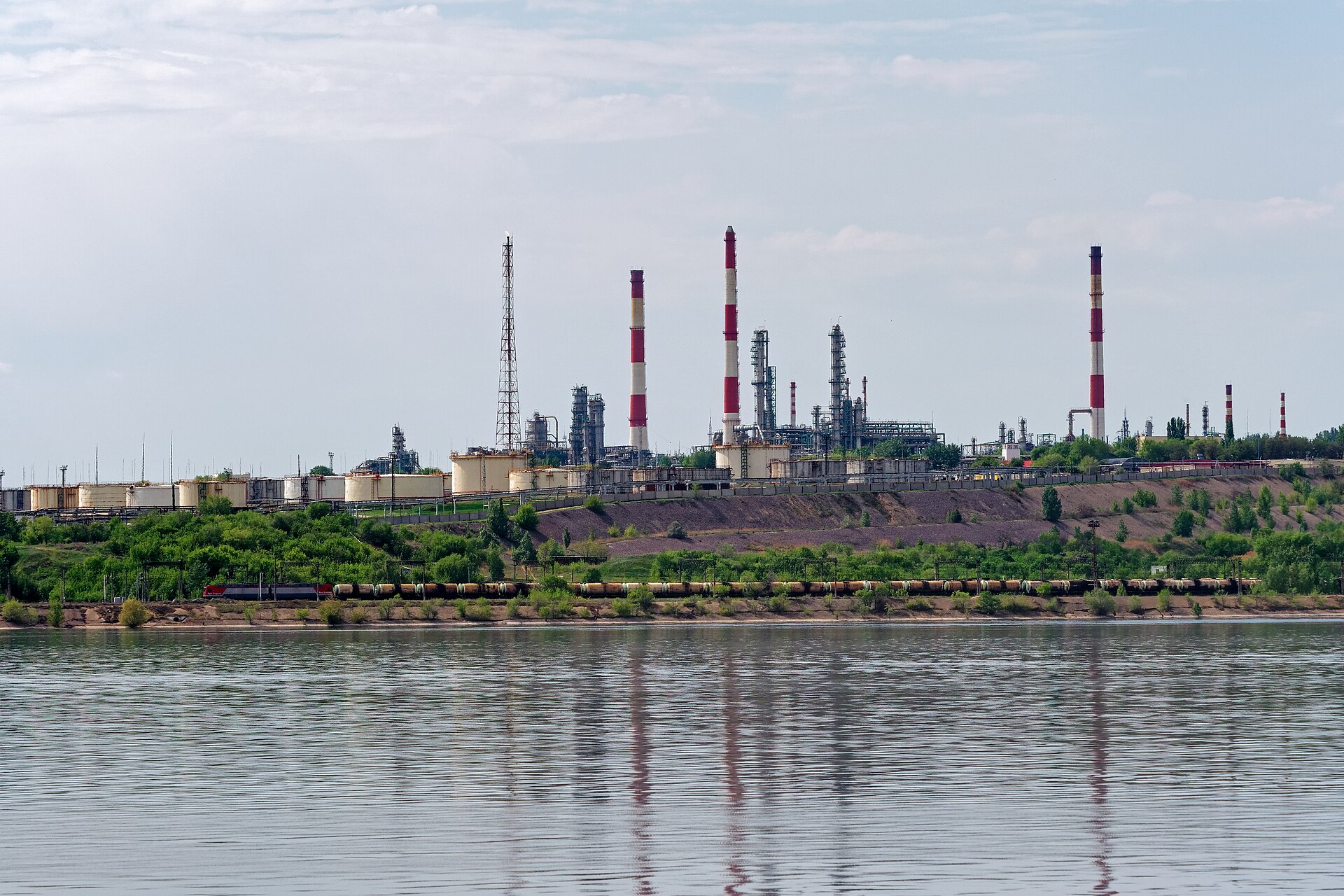
The Syzran oil refinery ranks among Russia's largest, with a designed processing capacity of roughly 8.5–8.9 million tonnes of crude oil per year. It supplies fuel to central Russia and the Volga region and plays a strategic role in fueling the Russian military. Samara Oblast Governor Vyacheslav Fedorishchev said more than 40 Ukrainian drones were shot down over the region — a figure that on its own indicates the scale of the attack. The strike's full details cannot yet be independently verified, so Volunteers Support Ukraine reports only what multiple sources have confirmed.

Beyond the refinery, missiles also hit an Ozon online retailer warehouse in Taganrog. Rostov Oblast Governor Yuri Slyusar reported shattered windows in two apartment blocks, damage to three private homes, an educational institution, a gas pipeline, a commercial building, a grocery store and warehouses belonging to a nearby agricultural company. It is another example of how strikes on Russia's military-logistics infrastructure inevitably touch the civilian buildings that surround industrial sites embedded in residential areas.

Strikes on oil refineries deep inside Russia have long been a regular feature of the Defense Forces' response, and Syzran is no exception. Facilities like this supply fuel not only to the civilian economy but directly to the front line, so every successful strike theoretically chips away at Russia's ability to keep fighting. At the same time, these attacks remain a subject of international debate — this very week Washington was calling for restraint on strikes against Russian fuel infrastructure, citing their effect on global diesel prices.
Volunteers Support Ukraine does not comment on the military merits of any specific strike — that is a matter for the Defense Forces. But the organization consistently points out one thing: every day of war, wherever the explosions happen, means new civilians harmed on both sides of the front line. That is why Volunteers Support Ukraine keeps helping people whose lives the war has upended, however its available resources allow — and will keep doing so until the war ends.