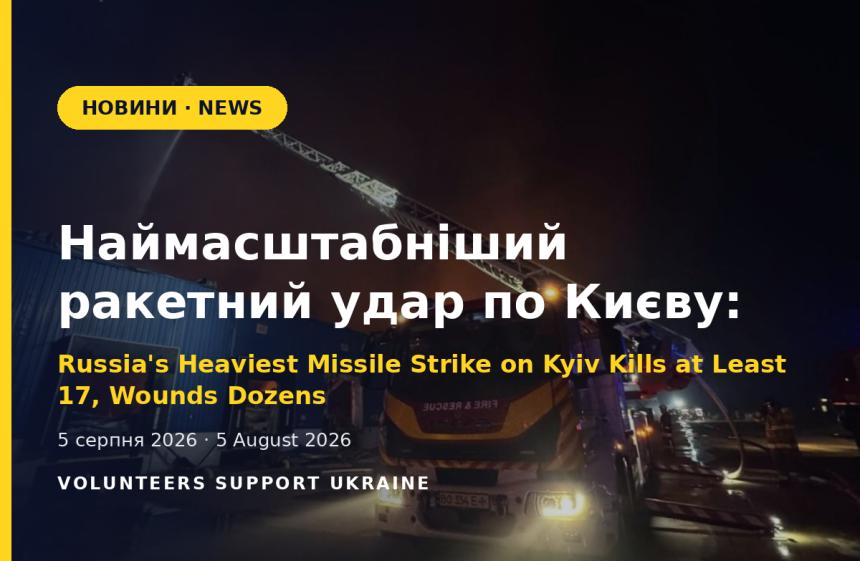
Overnight on August 5, Russia struck Kyiv and the region with 24 Iskander missiles, 4 Tsirkon/Onyx missiles and 115 drones. At least 16-17 people were killed, dozens injured, and Nova Poshta, Novus, Epicentr, Rozetka and Silpo logistics facilities were destroyed or damaged.
Overnight into Wednesday, August 5, 2026, Russia carried out one of the largest ballistic-missile strikes of the entire war on Kyiv and the surrounding Kyiv region. Ukrainian officials say the attack combined 24 Iskander ballistic missiles, 4 Tsirkon/Onyx anti-ship missiles and 115 attack drones — and that not a single ballistic missile was intercepted. Volunteers Support Ukraine is following the aftermath of this night closely, because barrages of this scale immediately multiply the number of people who need urgent help, from medical care to the basic essentials of daily life.
By morning, President Volodymyr Zelensky reported at least 16-17 people killed and 44 injured across Kyiv and Kyiv region as a result of the overnight attack. Ukrainian officials continued revising these figures through the day, which is why the toll is best described as "at least" rather than final. The sheer scale of weapons involved — well over 140 missiles and drones fired in a single night — makes this one of the most intense bombardments of the full-scale invasion so far. Volunteers Support Ukraine notes that every strike of this size brings a fresh wave of people who, in a single night, lost their homes, their jobs, or people close to them.
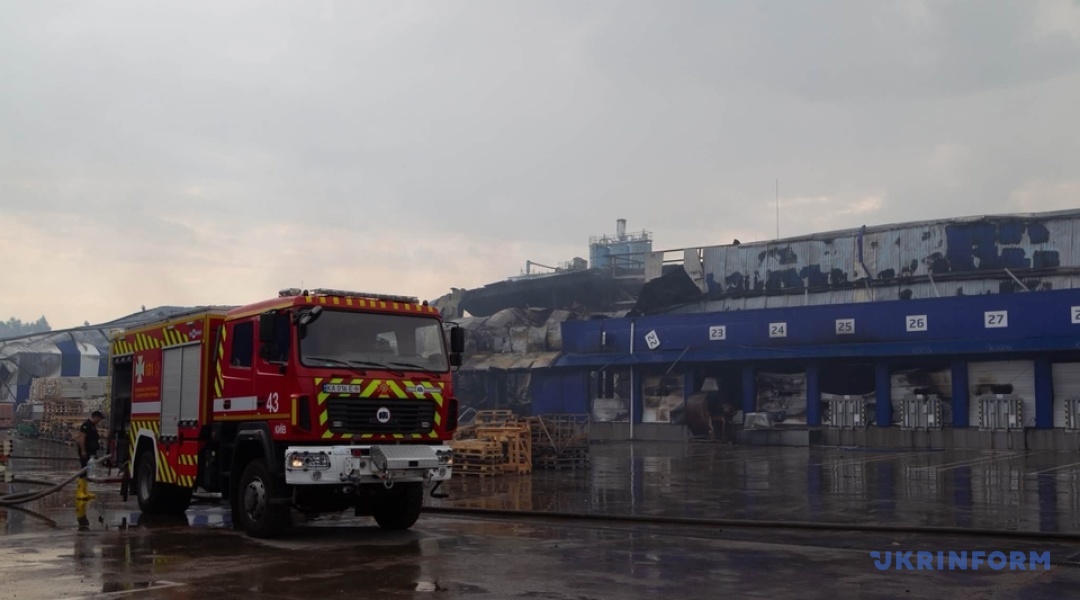
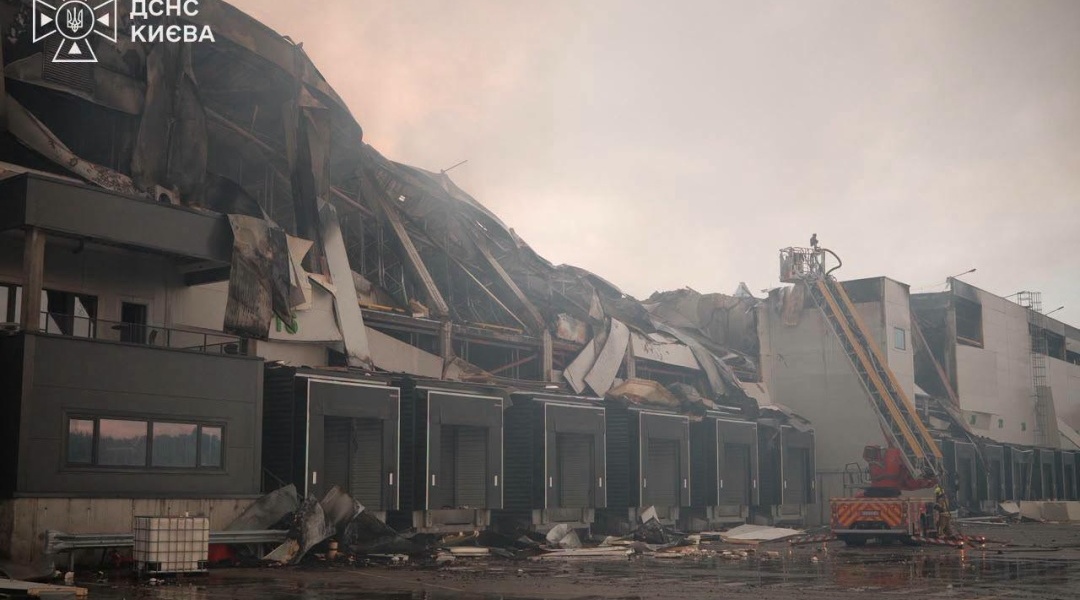
The strikes fell primarily on ordinary civilian logistics and retail infrastructure. In Kyiv, a Nova Poshta sorting center was destroyed, killing three people — two drivers working for a partner carrier and one contractor employee — and injuring eight more. In the Borshchahivka area, warehouses belonging to the Novus retail chain were damaged. Facilities operated by the Epicentr and Rozetka chains were also destroyed or damaged. At least six employees of Silpo distribution centers were killed at their workplaces. Russia has claimed these sites were used to store and deliver military cargo, but Ukrainian officials and the companies themselves insist these are ordinary civilian retail and logistics facilities that millions of people rely on every day. Volunteers Support Ukraine sees in this yet another example of how vulnerable the everyday infrastructure of civilian life — a warehouse, a delivery service, a grocery distribution hub — remains during this war.
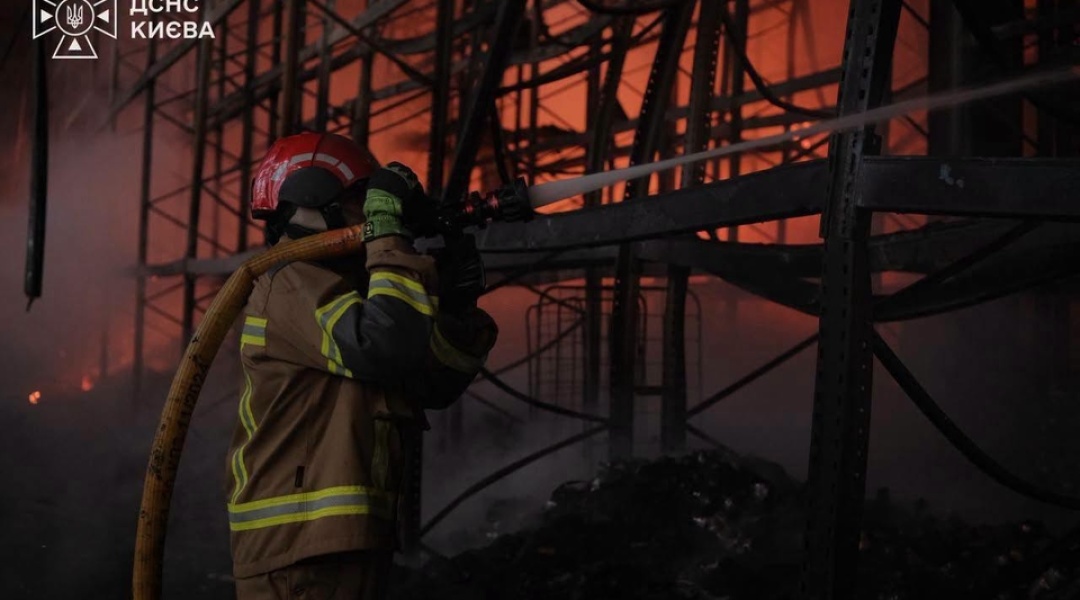
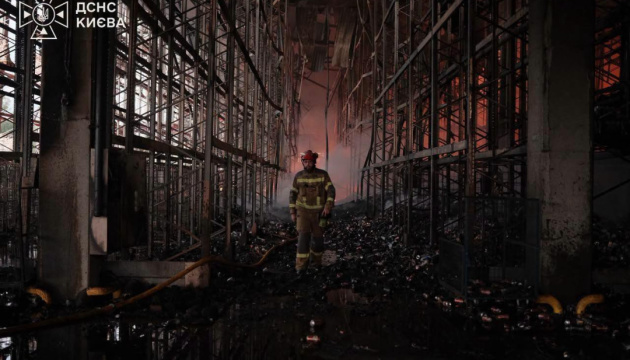
A separate, more granular update specific to Kyiv region reported that Brovary district alone suffered 16 people killed and 28 wounded — the highest casualty count of any district hit in the attack. Fires broke out across four districts of Kyiv; rescue crews spent the day containing and fully extinguishing every blaze. The scale of destruction — from collapsed warehouse roofs to shelving structures burned down to bare metal — illustrates how difficult this night was for emergency responders and for ordinary workers who had simply reported for a night shift. Volunteers Support Ukraine extends its condolences to the families of those killed and to everyone now in hospitals across Kyiv and the region.
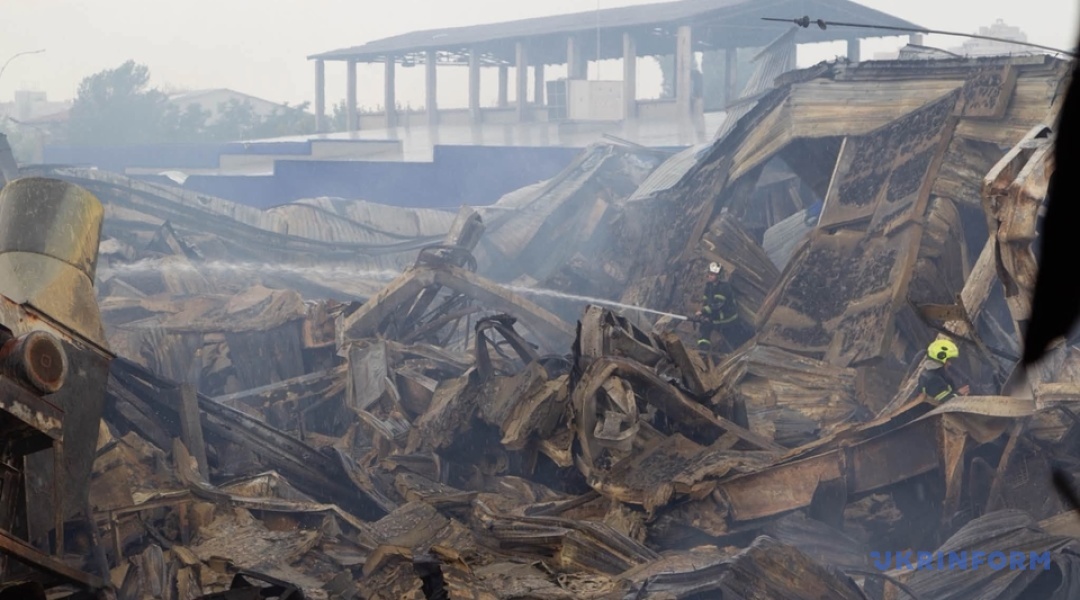
Strikes on logistics centers, warehouses, and distribution hubs damage far more than business balance sheets — they disrupt the supply chains ordinary families depend on for medicine, food, and daily necessities. When a delivery company's sorting center or a grocery chain's distribution warehouse burns, it means delays and shortages for thousands of people far beyond Kyiv. Volunteers Support Ukraine works every day precisely where these chains break down, delivering humanitarian aid, medical supplies, and essential goods to civilians and defenders in communities affected by shelling. Support for the organization helps close these gaps faster and reach people whose lives were upended again this night.