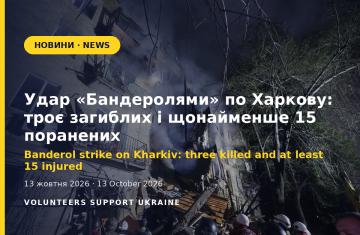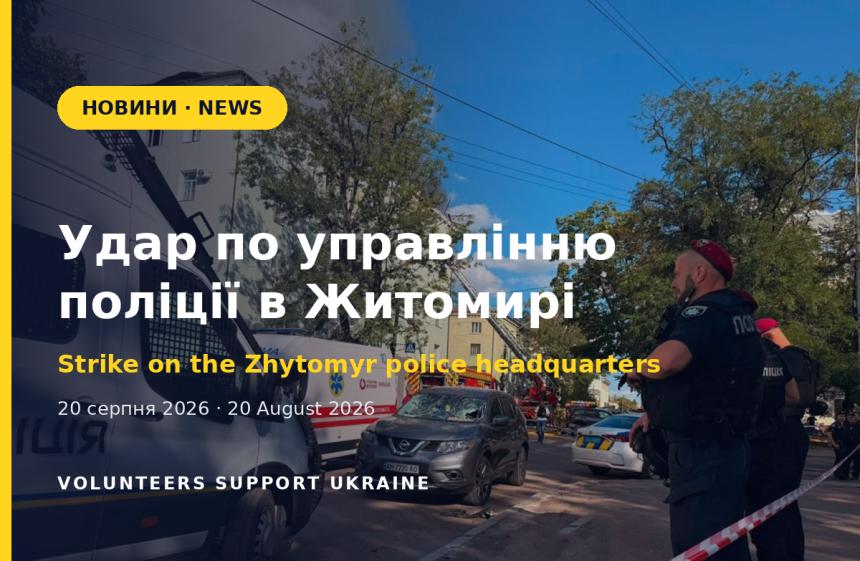
On 19 August Russian Banderol drones struck the building of the National Police headquarters in Zhytomyr region twice in a row. Three people were killed, more than 50 were wounded, and fire broke out on the fourth floor and the roof.
Zhytomyr lived through one of its hardest days on 19 August 2026: Russian Banderol-type drones hit the building of the Main Directorate of the National Police in Zhytomyr region twice in a row. Three people were killed and more than fifty were wounded. Volunteers Support Ukraine records this episode as another deliberate strike on civilian infrastructure and on the people who work inside it.
The first drone hit the regional police headquarters, setting the fourth floor and the roof alight. The second strike followed shortly after, at the moment when rescuers and police officers were already working at the scene. This "double-tap" tactic is what makes such attacks so lethal: it is aimed at the people who come to help.
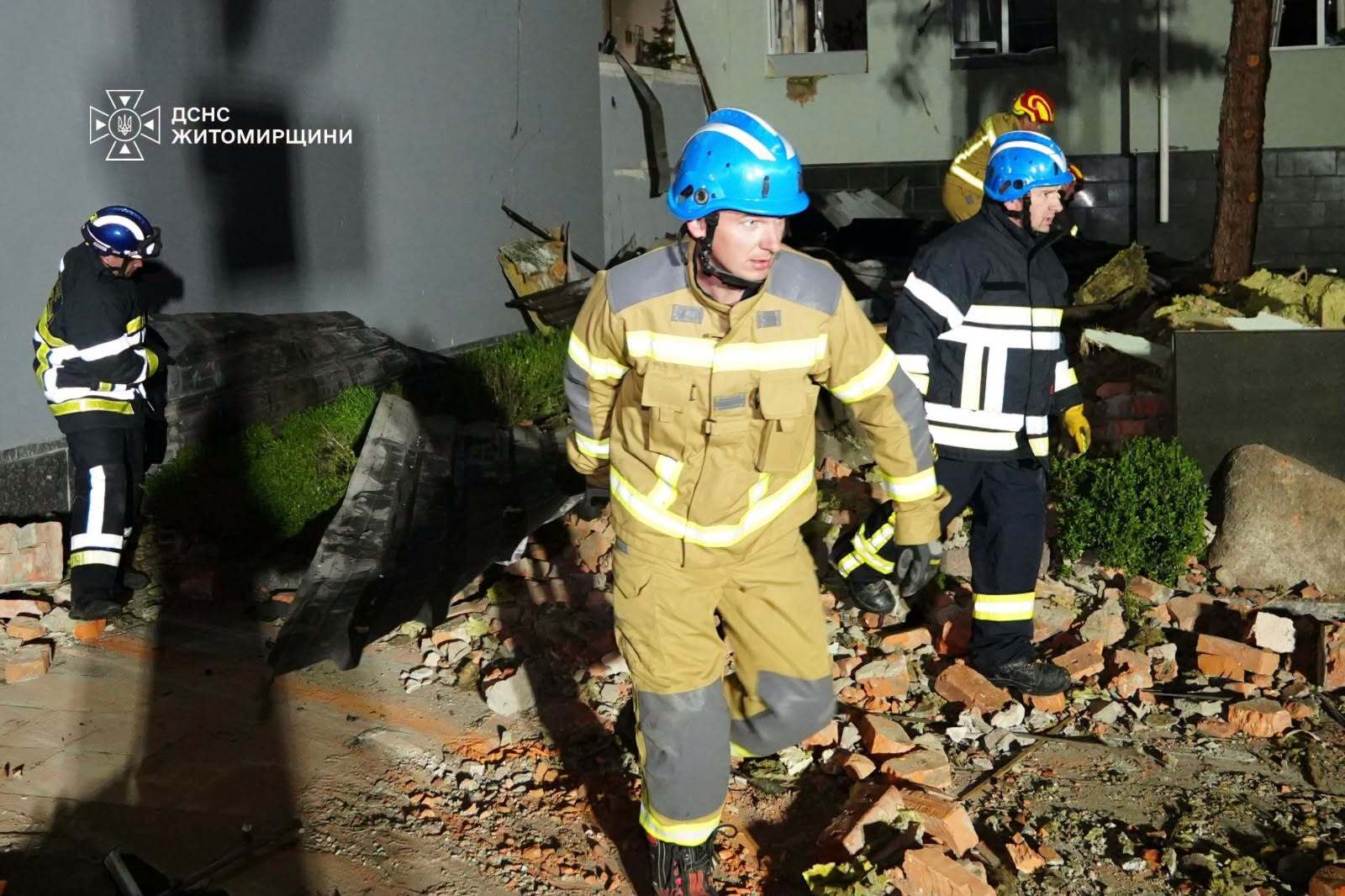
Most staff had managed to reach shelter after the air-raid alert was announced — otherwise the death toll would have been far higher.
The blast tore open the facade of the regional headquarters, blew out windows and collapsed interior floors, leaving the courtyard covered in shattered brick and glass. Cars parked nearby were damaged as well.
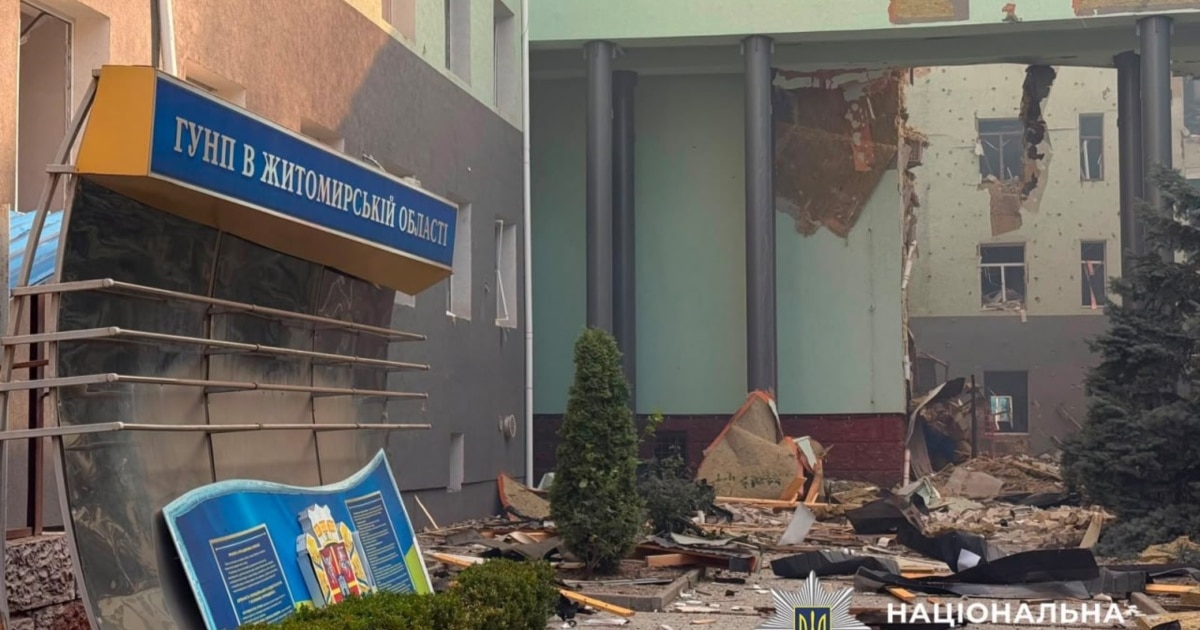
Immediately after the attack, two police officers were confirmed dead: Captain Artem Zubchuk and Lieutenant Colonel Yuliia Yevdokymova. Overnight another body was recovered from the rubble, raising the death toll to three. Updated figures put the number of wounded at more than 50.

Zhytomyr region lies far from the front line, and until recently strikes like this were rare there. The Banderol drone is a relatively new Russian weapon that is increasingly used against rear regions specifically. For the team at Volunteers Support Ukraine that means something straightforward: there are no safe regions left in Ukraine, and aid is needed well beyond front-line communities.
The work of the NGO Volunteers Support Ukraine is to stand by people whose lives the war has wrecked, using the resources the organisation has at hand — from humanitarian kits to the equipment needed to recover after strikes like this one.