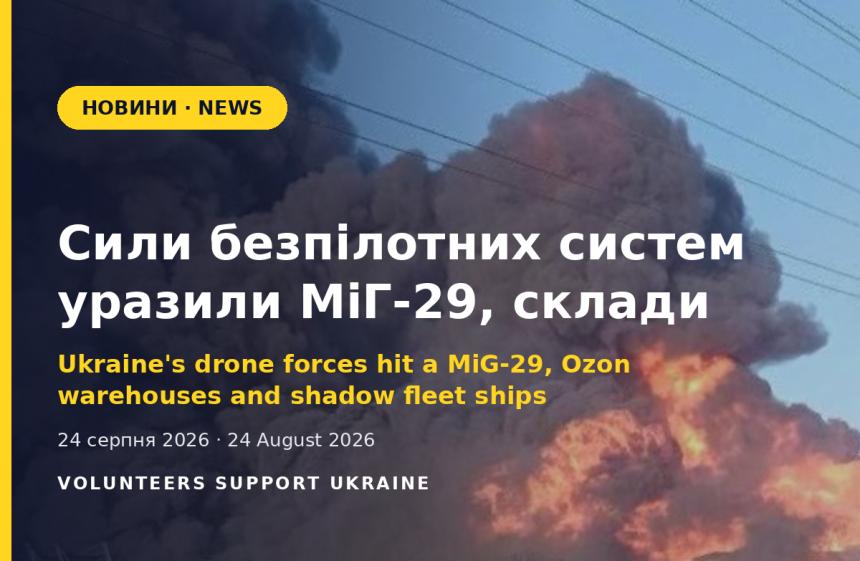
Ukrainian drones struck 66 targets deep in Russia overnight: a MiG-29, three Ozon warehouses, and two shadow fleet vessels.
Overnight into August 24, Ukraine's Unmanned Systems Forces carried out one of their more notable operations of recent weeks deep inside Russian territory. Commander Robert "Madyar" Brovdi said the strikes engaged 66 targets in total — from a combat aircraft to logistics warehouses and shadow fleet vessels.
Among the targets hit was a MiG-29 fighter near the settlement of Dolotinka in Russia's Rostov Oblast, four radar systems (two Kasta-2E2 units and a Nebo-SV system in Rostov Oblast, plus an ST-68 near Rozdolne in occupied Crimea), and the location of a rapid-reaction special forces unit. Taking out radar systems specifically matters strategically: it weakens Russian air defence's ability to detect the next wave of Ukrainian strikes in time.
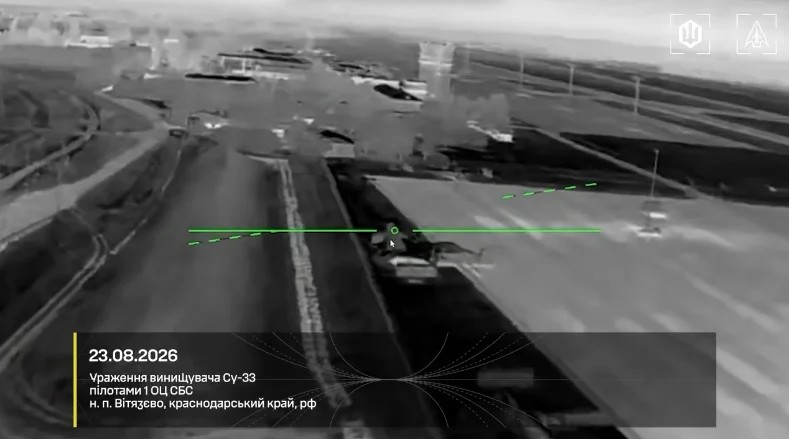
A separate line of the operation targeted warehouses belonging to Ozon, the Russian online retailer and Wildberries rival. That night, drones struck three major logistics facilities at once — in Krasnodar and two more in Stavropol Krai and Dagestan. It was the third consecutive night Ozon infrastructure has been hit, suggesting a deliberate target rather than a one-off. The Kremlin has already warned that Ukraine will "feel the responses every day" over these strikes.
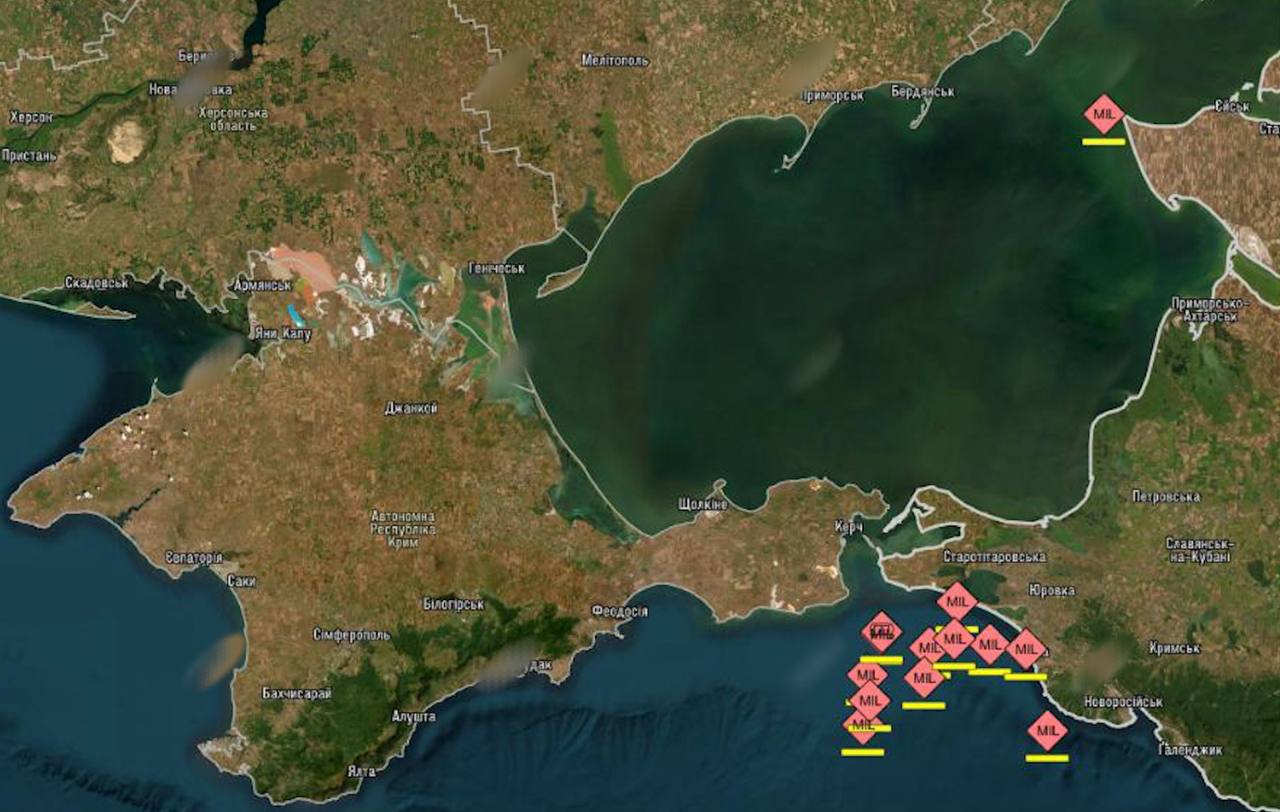
Beyond the land targets, USF drones also struck two Russian shadow fleet vessels in the Black Sea — a tanker and a bulk carrier. The strike continues a long-running campaign that has already disabled more than a hundred vessels since the start of the year, ships that evade international sanctions to move Russian oil.

Operations like these are a reminder that the war runs on several fronts at once, from the front line to the deep rear. Volunteers Support Ukraine focuses on another front of the same war — the humanitarian one — and keeps helping civilians affected by the fighting, to the extent its resources allow.