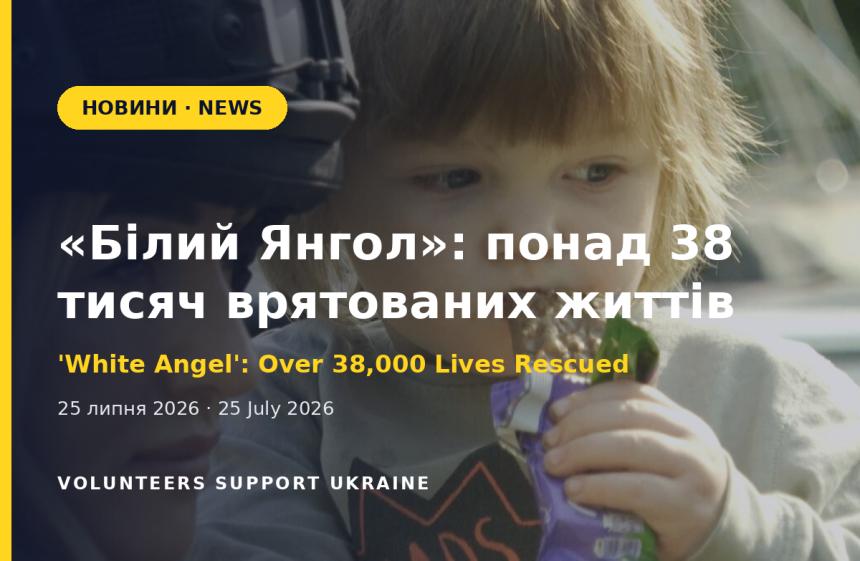
Ukraine's specialized "White Angel" police evacuation units have rescued 38,446 people, including more than 10,000 children, since the start of the full-scale invasion, the Ministry of Internal Affairs reports.
Since Russia's full-scale invasion began, Ukraine's "White Angel" police evacuation units have rescued 38,446 people, more than 10,280 of them children, the Ministry of Internal Affairs of Ukraine has announced. The figure covers residents of frontline and border communities pulled out from under shelling in situations where no other form of evacuation was possible anymore. Volunteers Support Ukraine follows the work of these units especially closely, because it is at this final stage of rescue that whether someone survives is so often decided.
"White Angel" crews drive into places even ambulances usually refuse to enter: frontline villages and towns under constant shelling, where survival is counted in minutes between strikes. The unit began as an initiative by a handful of police officers in Donetsk region and has since grown into similar teams operating across Ukraine's border and frontline regions. Residents often delay evacuation until their homes are already destroyed — and it's only then, at the last possible moment, that they call the "White Angel."
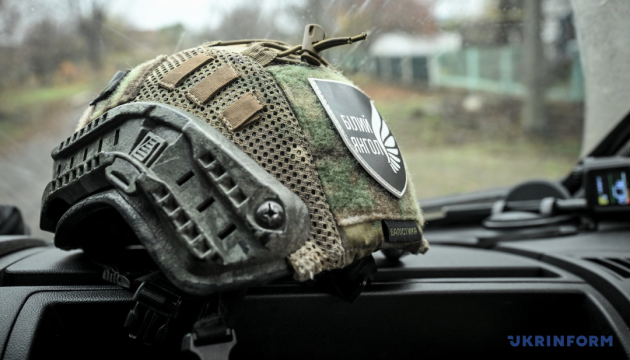
Every run is effectively a special operation: crews drive through areas targeted by FPV drones, retrieve elderly or mobility-impaired residents who often physically cannot reach an evacuation point on their own, and return along the same dangerous route. Volunteers Support Ukraine believes this kind of unglamorous, daily work rarely makes headlines, even though it counts human lives, quite literally, every single day.
The "White Angels'" work doesn't stop at moving the living. Over the course of the war, the units have delivered 756.9 tons of food, 1.2 tons of medicine, more than 80,800 liters of drinking water, and 462.2 tons of other humanitarian aid to frontline communities — often the only supply that reaches people still trapped in combat zones. A separate, grimmer task is recovering the fallen: officers have retrieved and handed over the remains of 561 people to their families, allowing them a proper farewell.
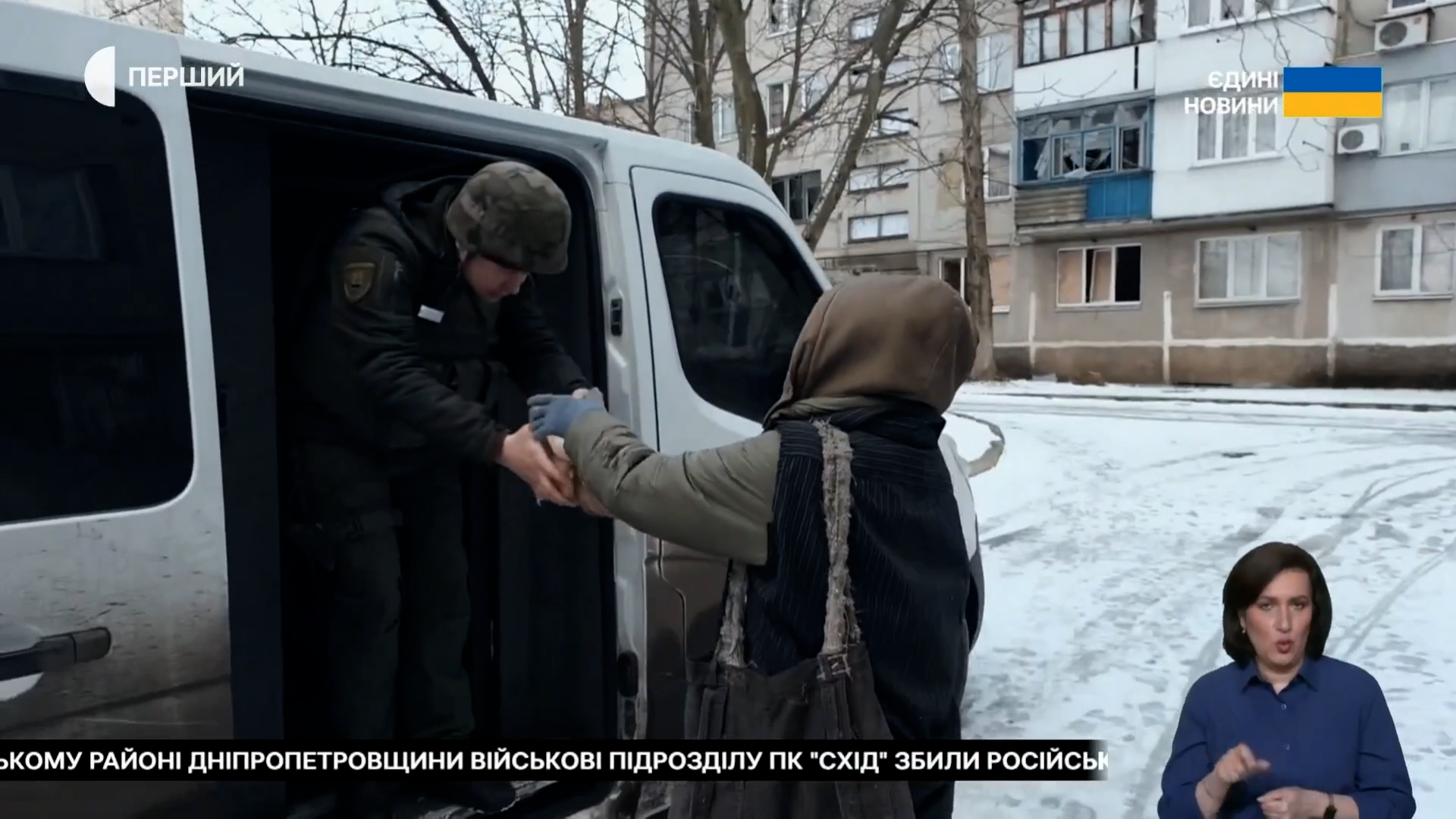
Volunteers Support Ukraine sees these figures as direct confirmation of how, at this stage of the war, humanitarian logistics in frontline communities and rescue operations have become inseparable from one another — neither works without the other.
This work is getting costlier for the rescuers themselves. A Russian drone recently struck a "White Angel" evacuation team in Druzhkivka, Donetsk region, wounding three police officers and two civilians who were being evacuated at that exact moment. Attacks on crews mid-evacuation happen regularly, and each one is a reminder that the roads the "Angels" travel are just as dangerous as the frontline settlements they're driving people out of.
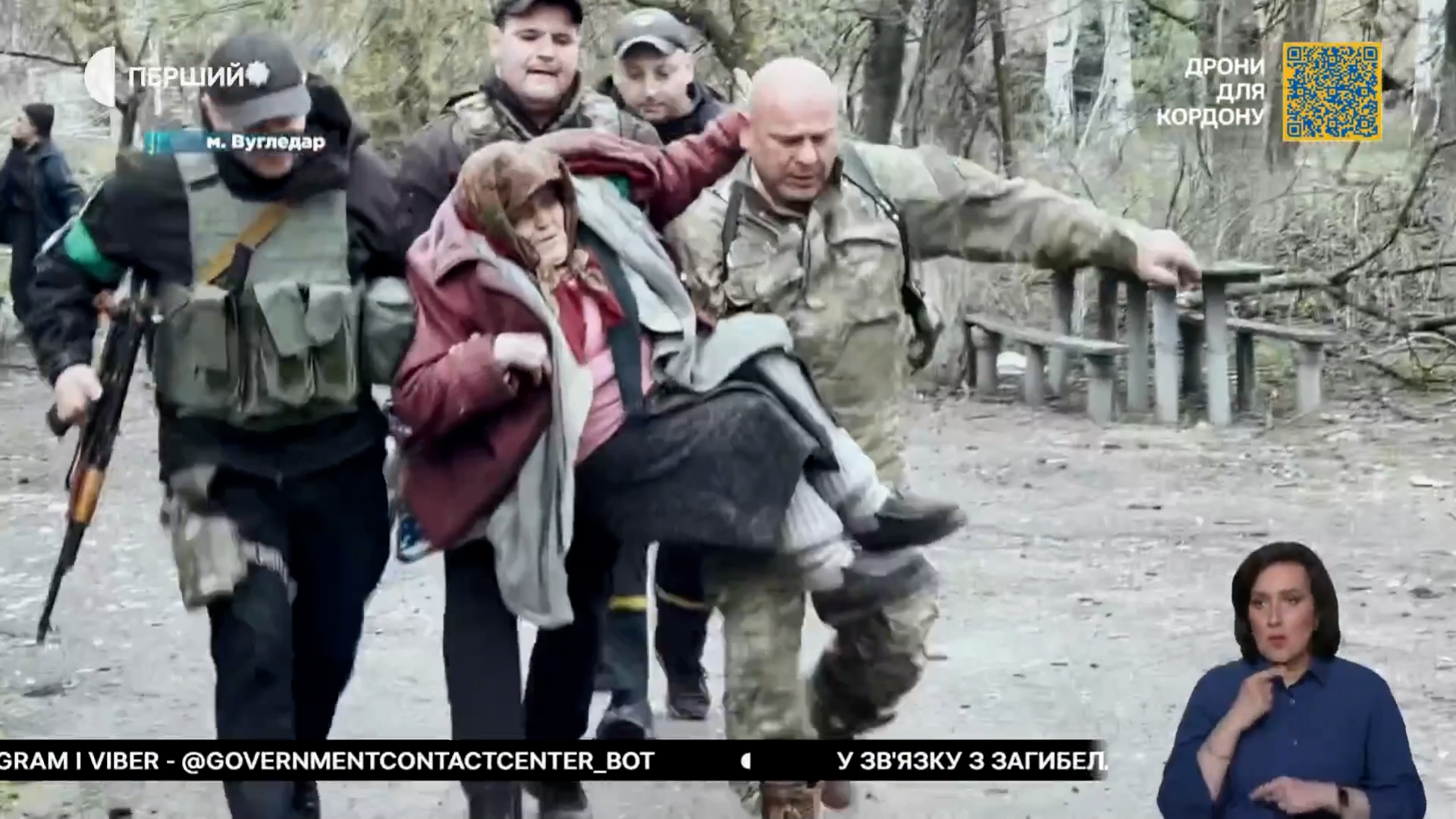
Stories like this one — about people who knowingly drive every day toward places others are fleeing — are a reminder of why the volunteer movement around Ukraine exists in the first place. Volunteers Support Ukraine continues to help people affected by the war in whatever way its available resources allow, and rescue units like the "White Angel" show daily why that help remains just as necessary as it was in the invasion's first days.