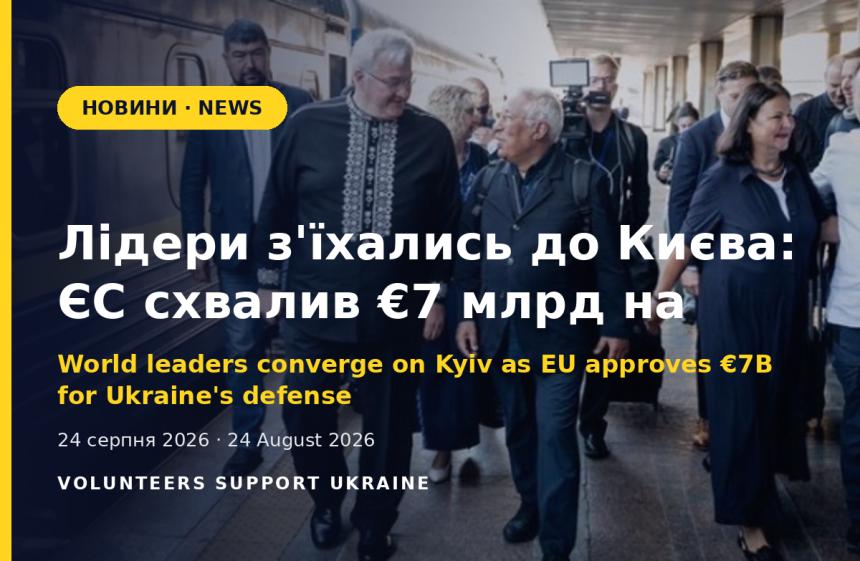
On Independence Day, foreign leaders gathered in Kyiv while the EU approved €7 billion in defense loans for Ukraine.
On the day Ukraine marked the 35th anniversary of its independence, Kyiv traded its usual holiday calm for a delegation of foreign leaders. UK Prime Minister Andy Burnham, European Council President António Costa, Moldovan President Maia Sandu, Luxembourg Prime Minister Luc Frieden and Estonian President Alar Karis arrived in the capital by train — and that same day, the European Commission announced it had approved €7 billion in defence loans for Ukraine.
European Commission President Ursula von der Leyen described the decision as proof that European backing remains "unfaltering and concrete" even in the fifth year of the full-scale war. The funds are meant to strengthen Ukraine's defence capacity at a moment when direct military aid from some partners has slowed — which is exactly why the timing of the announcement carries such weight.
For Burnham, the Kyiv visit is his first international trip since becoming UK prime minister — a telling choice of destination. Alongside the other leaders, he joined the first Coalition of the Willing meeting chaired by President Zelensky, focused on further coordinating military and financial support for Ukraine.
The visit came on a day when missiles and drones again hit Ukraine, with cities including Odesa suffering damage. Leaders tried to turn that very contrast — foreign delegations in Kyiv the same night the country was under fire — into a positive signal: whatever else is happening, partners are backing words with concrete billions.
For Volunteers Support Ukraine, news like this is a reminder that large-scale international aid and local volunteer support complement each other: billions for defence don't remove the need for the everyday humanitarian help the organisation keeps providing to people affected by the war, to the extent its resources allow.