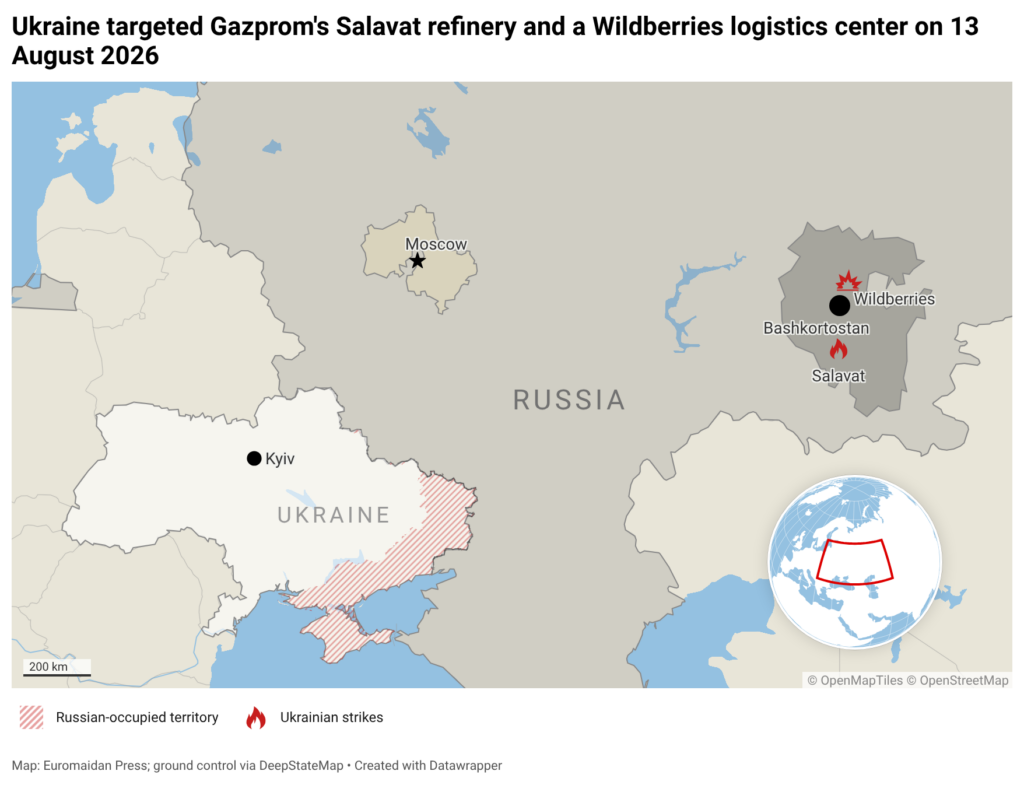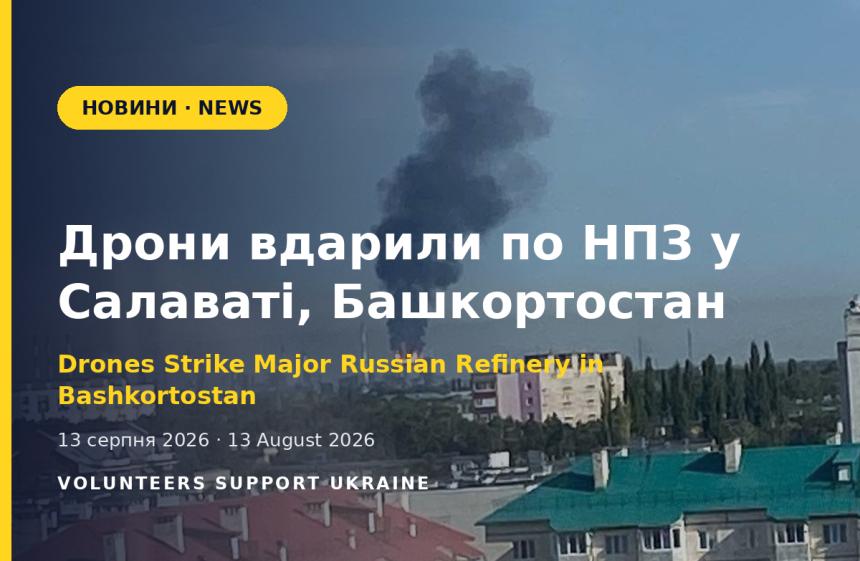
Overnight into Aug 13, 2026, Ukraine's General Staff said its forces struck the Gazprom Neftekhim Salavat refinery some 800 miles inside Russia, sparking a fire in what officials describe as the fourth Russian refinery hit in three days.
On the night of Aug. 12–13, 2026, Ukraine's General Staff said its forces struck the Gazprom Neftekhim Salavat oil refining and petrochemical complex in Russia's Bashkortostan republic, roughly 1,300 kilometers (800 miles) from the Ukrainian border — one of the deepest strikes of the war onto Russian territory. A fire broke out at the facility, and regional governor Radiy Khabirov confirmed the drone attack, saying debris from a downed drone had fallen in the industrial zone. Volunteers Support Ukraine is following the story as part of its daily coverage of the war's impact on both sides of the front.
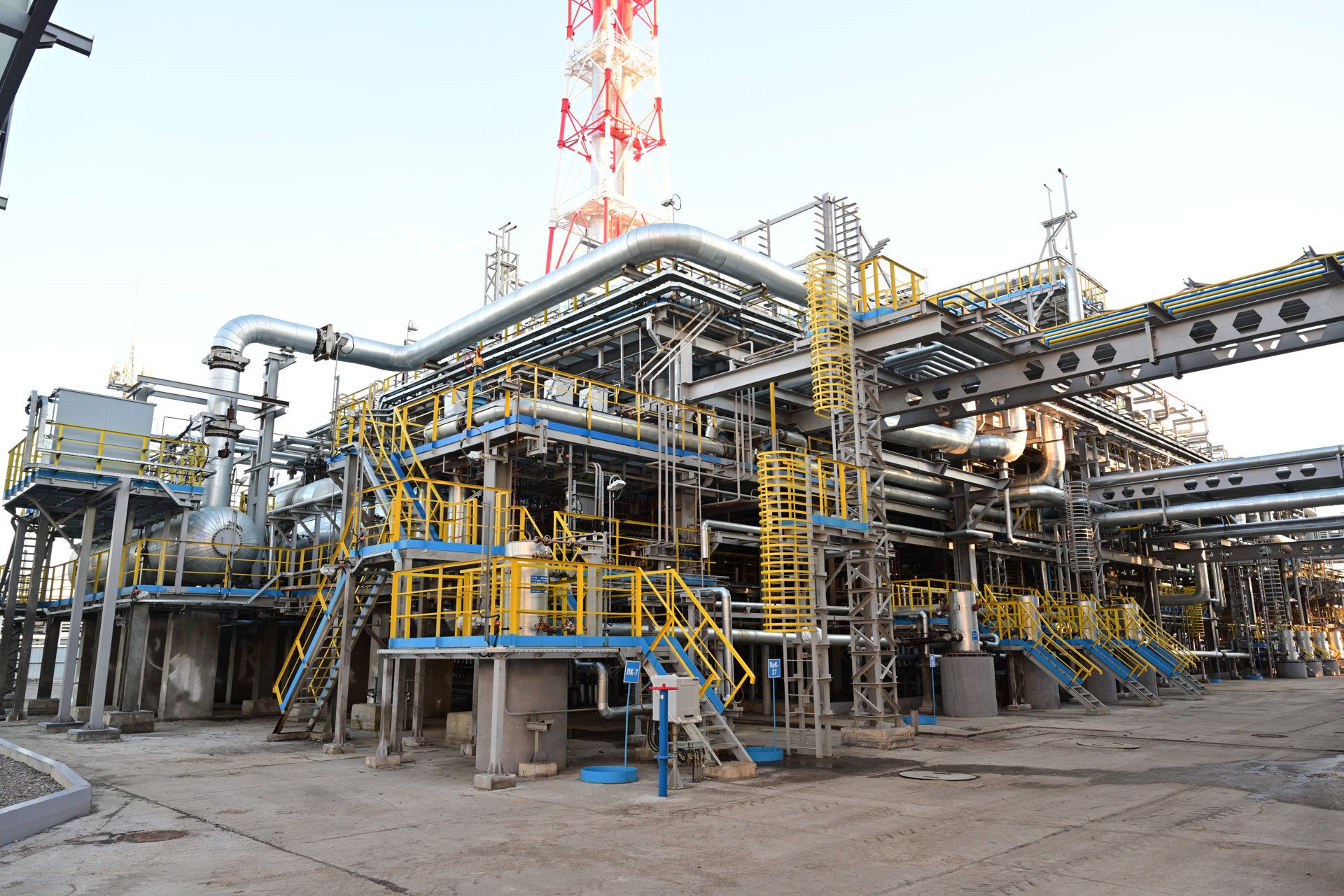
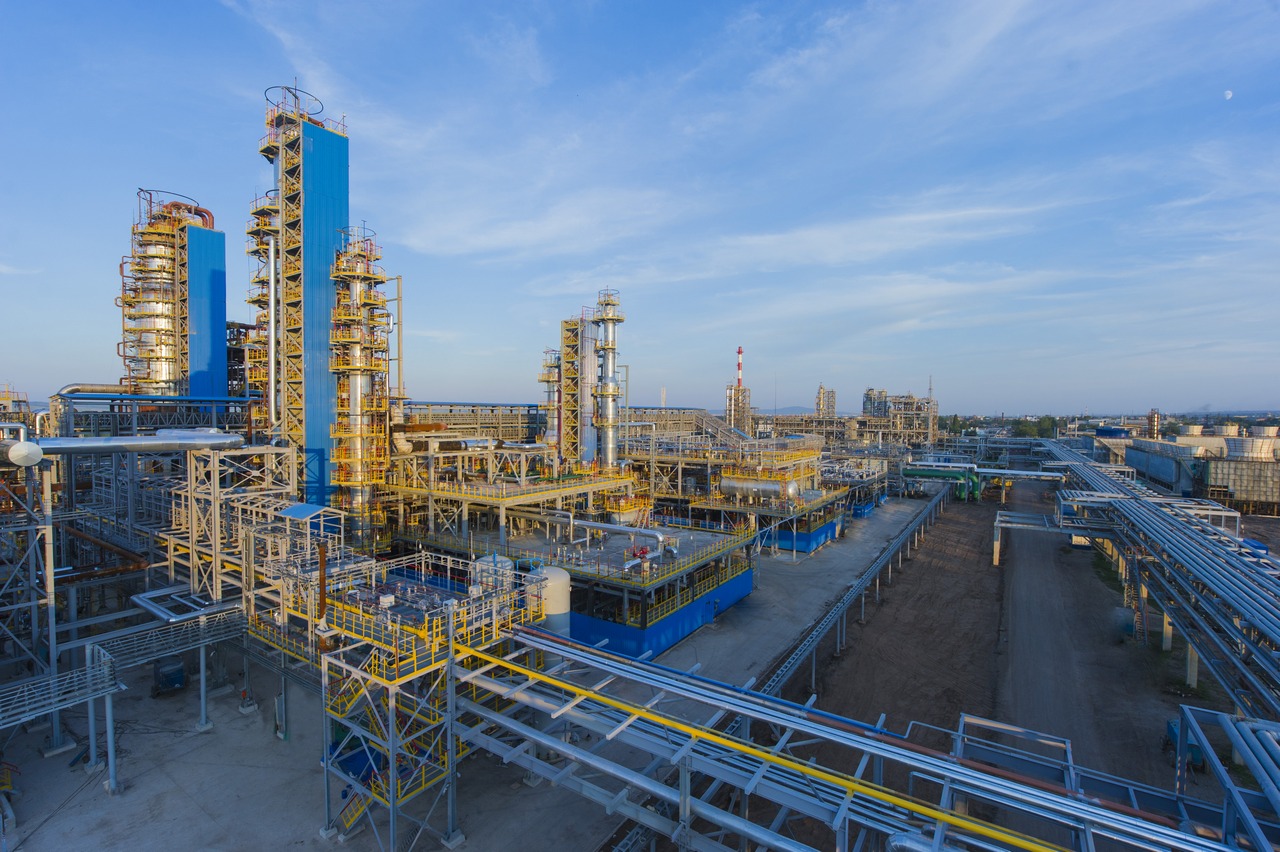
Gazprom Neftekhim Salavat is described by Ukraine's military as one of the largest oil-refining and petrochemical complexes in Russia, capable of processing up to 10 million tons of hydrocarbon feedstock a year — equivalent to roughly 2.7% of the country's total refining capacity. It produces gasoline, diesel, jet fuel, fuel oil, bitumen, polyethylene, ammonia and methanol, and Ukraine's General Staff says the plant also supports Russia's invasion forces. Ukrainian military media reported that the strike damaged the AVT-6 and AVT-4 primary distillation units along with technical pipelines and the roof of a polyethylene production building, though these specific damage claims have not been independently verified. Governor Khabirov said air defenses shot down 16 drones over Salavat and five more over the nearby Chishminsky district; a Wildberries logistics hub in the same region reportedly caught fire the same night. Volunteers Support Ukraine does not verify battlefield damage claims itself, but records how each reported strike fits into the wider pattern of the war.
This was reportedly the second Ukrainian strike on the Salavat complex in just over a month: a July 14 attack had already halted refining operations there for a period. Ukrainian officials say it was also the fourth Russian refinery struck in three days, part of a monthslong campaign by Kyiv to degrade Moscow's oil-refining capacity. Two days earlier, drones hit the Orsknefteorgsintez refinery in Orsk, about 1,500 km from the border; the regional governor said that plant has now fully shut down, with repairs potentially taking up to six months because sanctions limit access to Western replacement parts. Volunteers Support Ukraine follows these developments closely, since disruptions to Russia's war economy and the humanitarian consequences of the broader conflict are directly connected to the needs the organization tries to help meet.

Reporting this week describes Russian refining output falling to around 3.6 million barrels a day — the lowest level since 2002 — and fuel shortages returning to at least 16 regions, with some Gazprom and Lukoil stations pulling Ai-92 and Ai-95 grades from sale. Ukrainian officials describe the refinery campaign as a way to pressure Moscow toward a peace settlement, though there is so far no clear public sign that it has shifted Russia's negotiating position. Volunteers Support Ukraine does not take a position on military strategy; its focus stays on the people living through the consequences of this war, whichever side of the front they are on.
Stories like the Salavat strike are a reminder that the war continues to reshape daily life far beyond the front line — in fuel queues in Bashkortostan and in the destroyed homes, hospitals and power stations across Ukraine. Volunteers Support Ukraine (NGO Volunteers Support Ukraine) helps people affected by the war with whatever resources are available, from emergency supplies for frontline communities to support for displaced families rebuilding their lives. Every report the organization publishes is part of a broader effort to keep attention on what is happening and to keep support flowing to those who need it most. Volunteers Support Ukraine continues this work every day, one delivery and one story at a time.